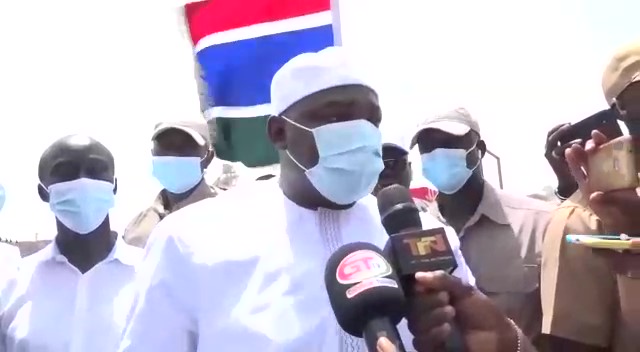
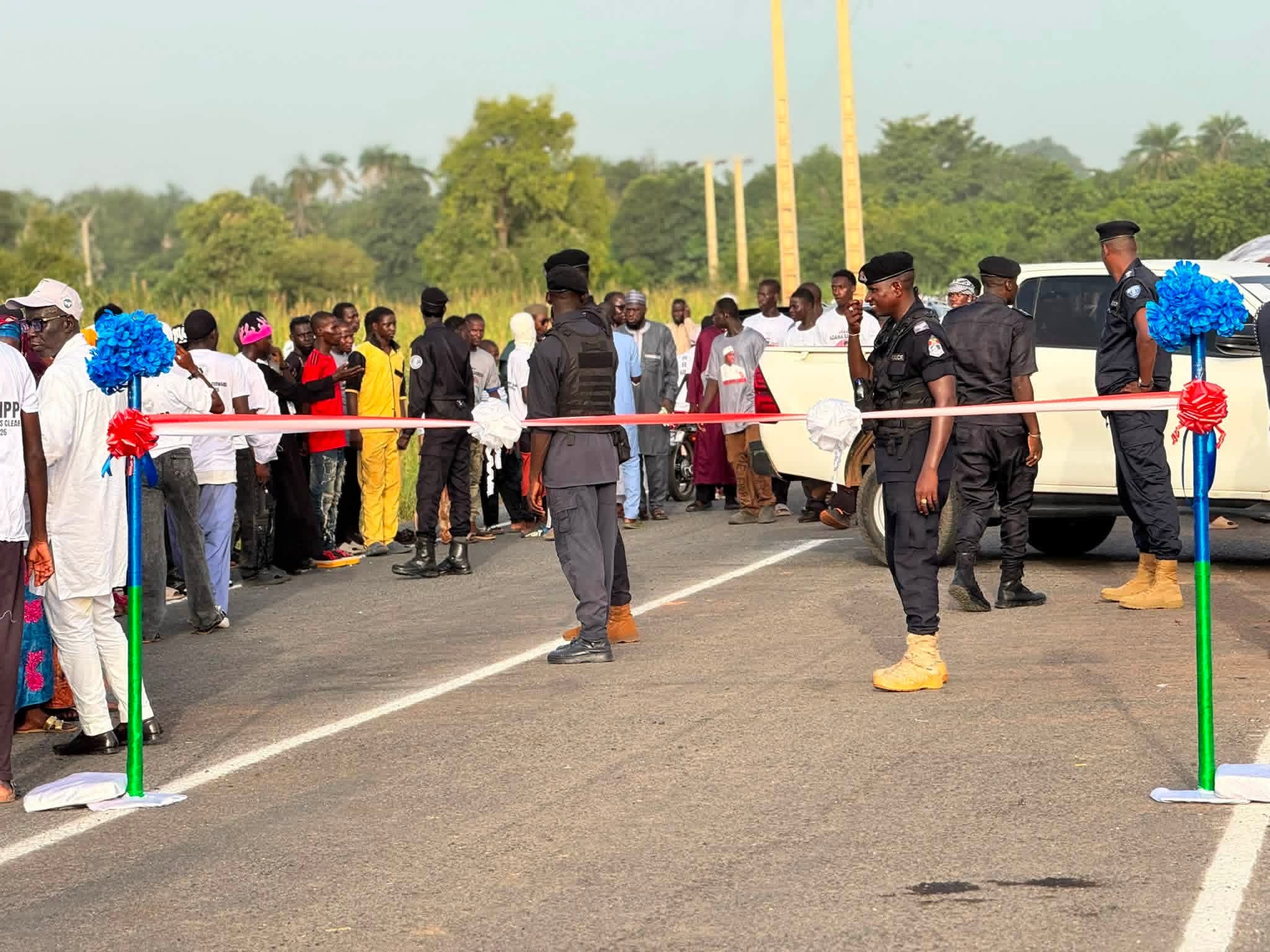
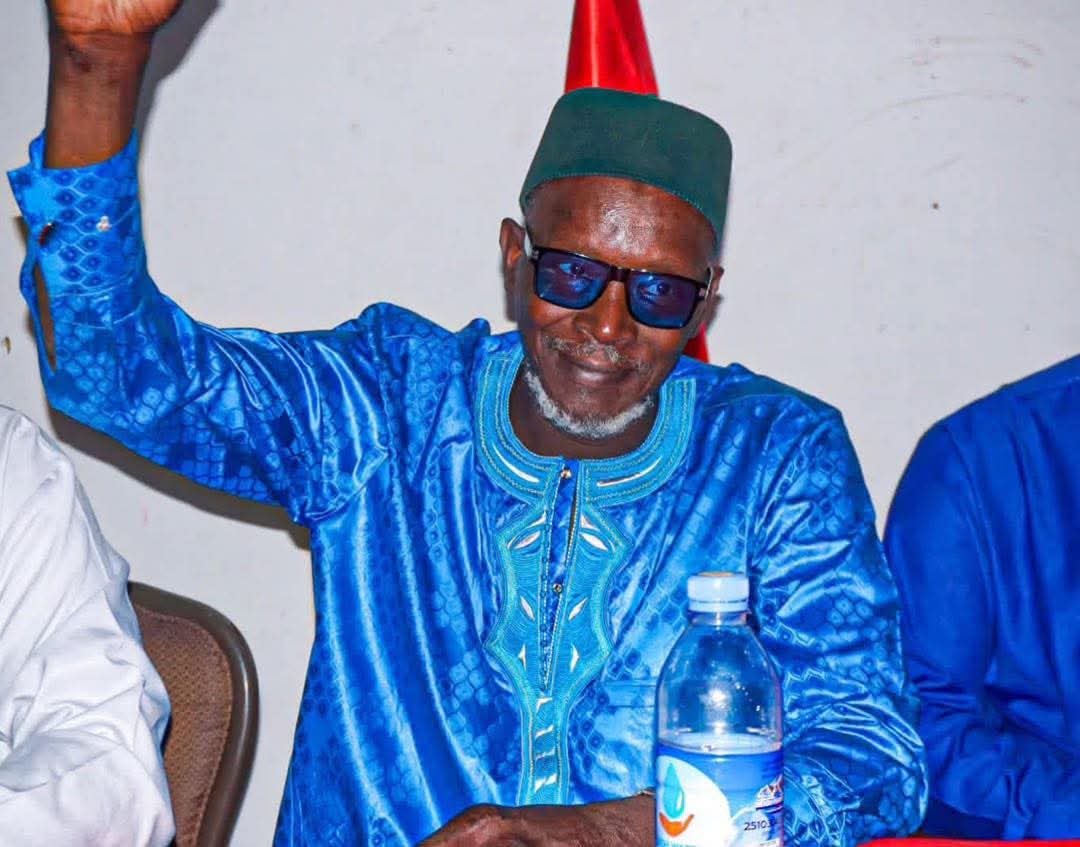
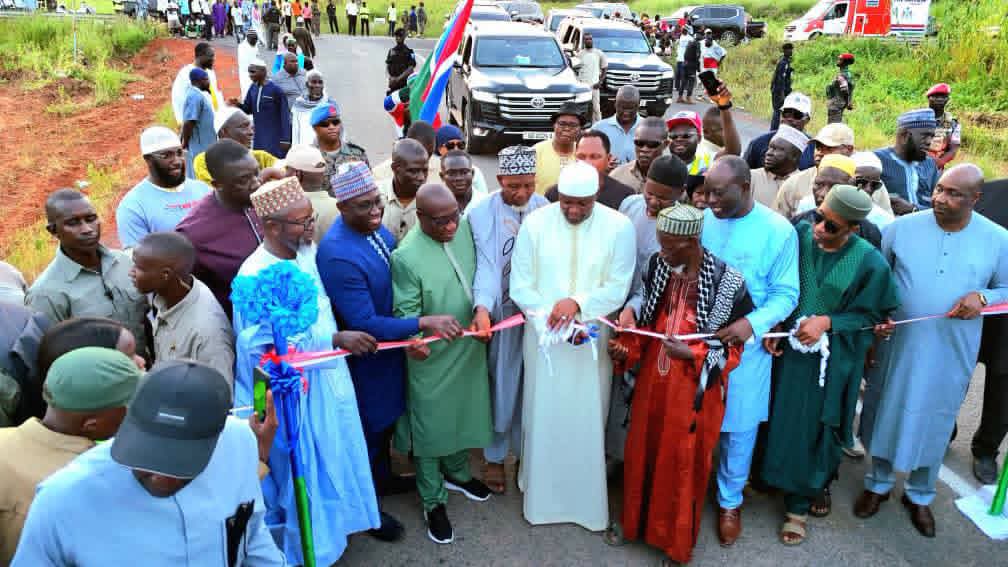
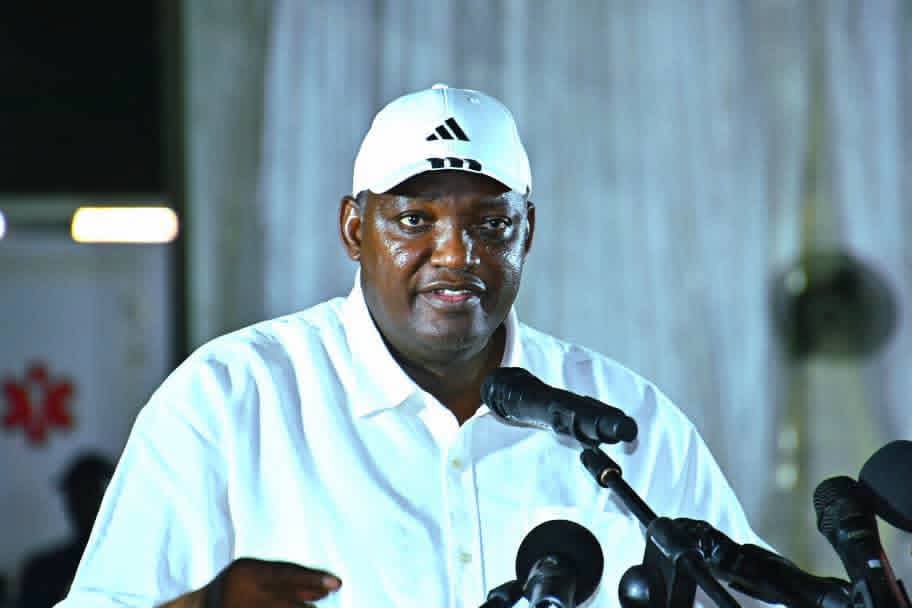
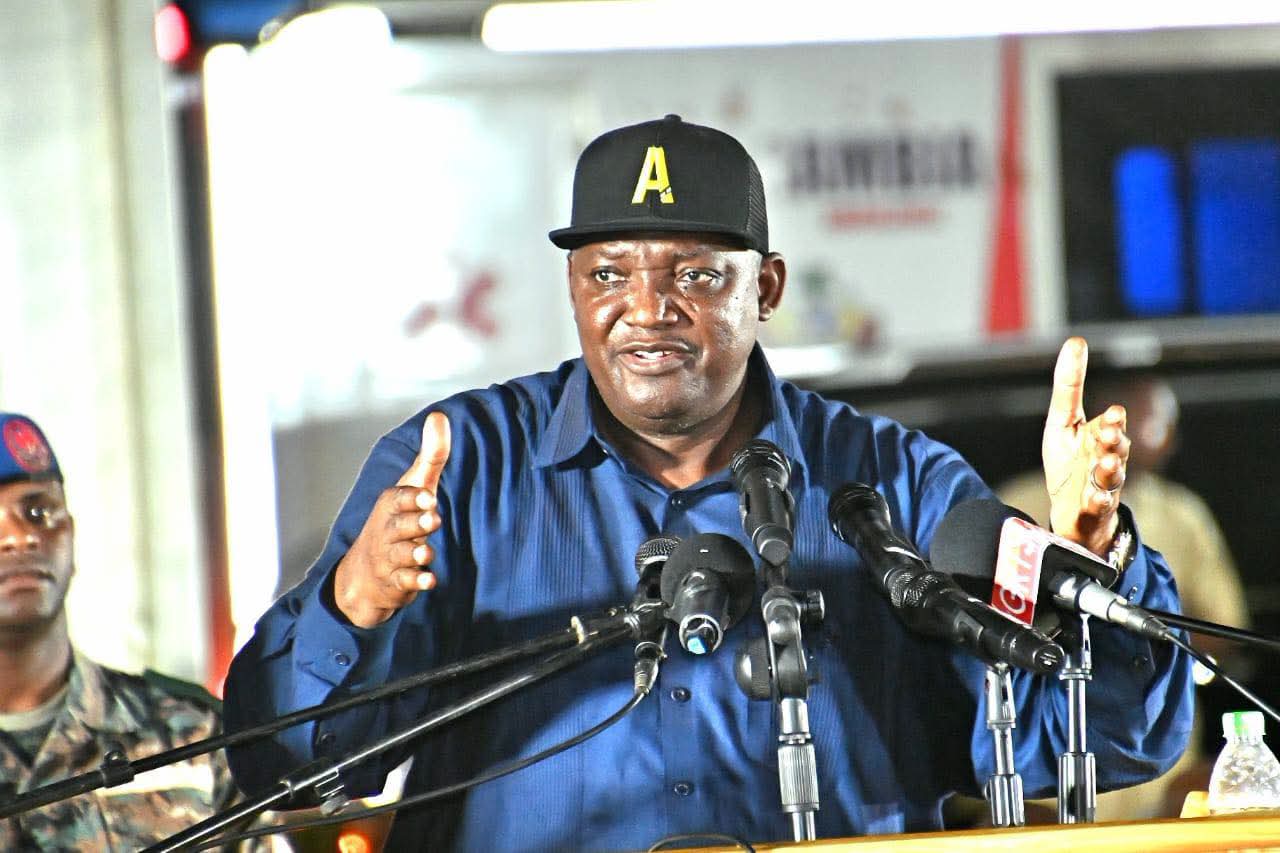
President Adama Barrow on Saturday inaugurated the Demba Kunda–Numuyel–Manneh Kunda–Basse road at a grand ceremony in Demba Kunda attended by thousands of people from Jimara and Basse.The 14-kilometre road provides a vital corridor for beneficiary communities, enhancing access to markets, health facilities, schools and other social services. The project underscores President Barrow's commitment to road infrastructure as a foundation for sustainable socio-economic development.After nearly two years of construction, the road linking Basse to Manneh Kunda, Demba Kunda and Numuyel was officially opened. The President, flanked by the Minister of Works, officials of the National Roads Authority (NRA) and community leaders, cut the ribbon to mark the inauguration.The road is fully funded by the Government under the Rural Roads Infrastructure Project, which seeks to decentralise development to communities across the country.Wild CelebrationsAfter the ribbon-cutting, President Barrow drove through the new road to Demba Kunda. Crowds lined both sides of the road, cheering and thanking the President for fulfilling one of the most pressing needs of Jimara and Basse.As he approached Demba Kunda, thousands of people welcomed him with great fanfare and excitement, escorting him to the meeting grounds where elders lined up to greet him.The Alkalo of Demba Kunda, 94-year-old Alhaji Degumeh Ceesay Camara, went down memory lane, recalling when travelling from Demba Kunda to Numuyel and Basse was a nightmare."In the past, it took a whole day to travel from Demba Kunda to Basse, but now it takes minutes," the Alkalo said with pride, as he expressed profound gratitude to President Barrow for his commitment to the welfare of the people.He challenged the people of Demba Kunda, Numuyel, Manneh Kunda and Basse to vote for President Barrow, describing it as a duty and responsibility to enable him to continue his development agenda.Similar calls were made by the representative of the Chief of Jimara, Alhaji Julaba Ceesay, youth representative Swaibou Jagana, and women's representative Fatumata Kanteh. The speakers said all 87 villages in the area are united in their desire to keep President Barrow in power, describing the upcoming December 5 election as a foregone conclusion.They hailed the road as a major milestone that will open up Demba Kunda and Numuyel to the rest of the country.Veteran politician and NPP Regional Chairman, Alhaji Bubu Drammeh, praised President Barrow for the landmark development, noting the dramatic reduction in travel time."It used to take 25 minutes to travel just 3 kilometres to Basse. Now it takes only 3 minutes to reach the regional capital," Bubu said to loud applause. He predicted a landslide victory for President Barrow, saying his development track record is unmatched in Gambian history.The National Assembly Member for Jimara, Hon. Essa Conteh, and the Governor of URR, Samba Bah, also commended the President for transforming the Upper River Region through roads, schools, health facilities and electricity, and both predicted a landslide victory in December.Built to Last 20 YearsThe Managing Director of the National Roads Authority, Sulayman Sumareh, said the 14km road is built to the highest quality standards and can last 20 years. Given its strategic location, he said the road is fitted with proper drainage to address perennial flooding in Numuyel and Demba Kunda, and will also be fitted with solar streetlights. He advised motorists to use the road with care.In his inaugural address, President Barrow said the road is more than a physical link."It brings better access, greater economic opportunity, easier movement, and a stronger connection between rural communities and the national road network," the President said.He noted that the people of Demba Kunda and Numuyel have long grappled with a poor road network that hampered development, but expressed confidence that the new road will enable them to realise their full potential.President Barrow reaffirmed infrastructure as a key priority of his government, with emphasis on decentralisation to reach every community. He, however, admonished road users and motorists to use the road responsibly and respect safety regulations.He expressed satisfaction with the quality of work and promised to expand the road network in Jimara and the wider URR, disclosing that 380km of roads are earmarked for construction if given another mandate.He appealed to the people of Jimara to vote for him and called on all Gambians to exercise their franchise in December, saying the stakes are very high and the outcome will determine the future of the country.The President later proceeded to lay the foundation stone for the construction of the Demba Kunda football field.
Continue Reading >>