TRAILBLAZING FEMALE REFEREE KADDY SAWANEH: THE JOURNEY OF YOUNG FEMALE REFEREE BREAKING NEW GROUNDS
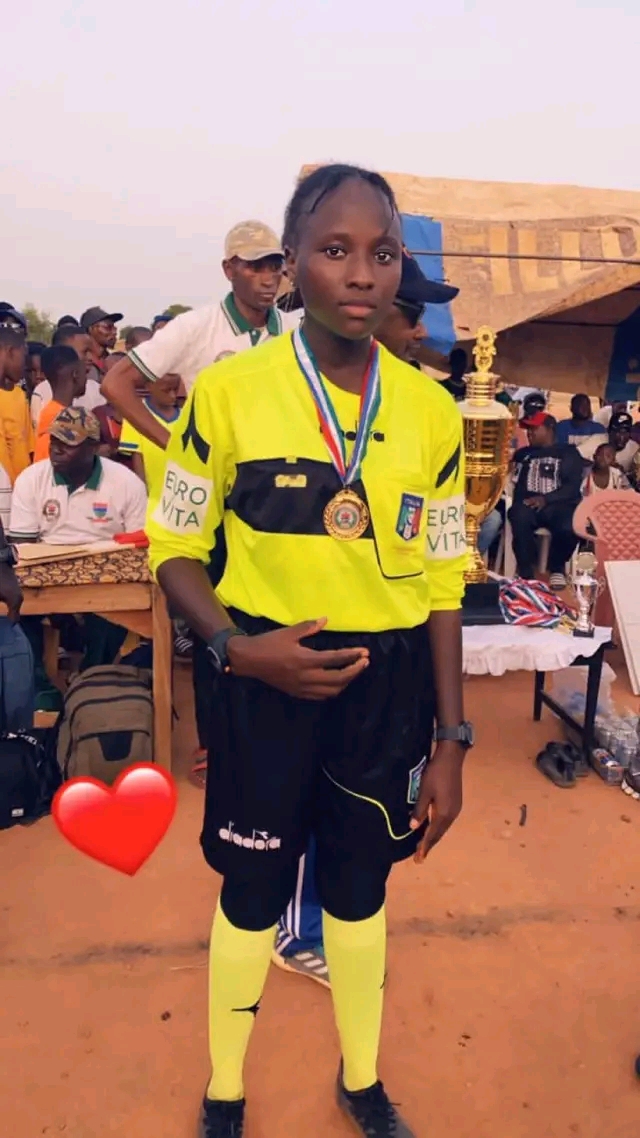
For many young people, in the Upper River Region, business is the only way out, while others rely on farming to earn a living, but that is not the case for one young lady. Kaddy Sawaneh decided to take on a totally different calling as she moved to become a professional football referee. Growing up as a kid, Kaddy Sawaneh said she developed a passion for the trade after seeing referees officiating games. "I admire it a lot when I see assistant referees running on the touchlines and raising flags."That encounter shaped her passion for the game, and she has since started pursuing refereeing as a career. A former sprint athlete at Tahir and Mahaad Senior Secondary Schools, sports have long been part of Kaddy's life. After completing her schooling at Mahaad, she ventured into refereeing in 2021, and fast forward to the 2024 season, she started officiating in the Gambia Football Federation Second Division League, after completing many tests including intense fitness routines. "After my schooling, I told my mum since it's difficult to have employment. I would like to do refereeing, but that comes with insults. She advised me to stay patient and look at my future." Kaddy said."So, I joined the West Coast Region Referees Association. We were given a course, cooper test, and training.""A day before the Cooper test, I vomited at the training ground because I didn't know how to run it. Many thought I would fail the fitness test, but when we went for the fitness (cooper) test, I completed it." She added.Kaddy's mother, Sunkarr Bah, said she is not bothered by the insults her daughter is concerned about. "When she told me about the insults, I told her to stay calm and respectful. Since they are not coming to my house to insult me, I'm not even aware. She should not even be bothered to respond or have problems with anyone, Sunkarr said.Maintaining a clear balance between her social life and her greatest passion is never a problem for the young referee.Every day, the young lady said she would do all her chores on time before heading out to the field for routine training with her colleagues and is committed to the training as in a real game situation. From training to real game situations, Kaddy is usually included on a male panel for tougher games, including finals, She follows game action with keen interest. A great pace and eye for detail are required, but she gives her best to avoid missing anything. The passionate lady is gradually going on to become a true success story in female refereeing across the regions. Kaddy became the first female to be included on a panel for a Regional Third-Division final when she served as an assistant referee in a mouthwatering clash between Garawol and Sabi at the Basse mini stadium on June 29, 2024, where she demonstrated a great understanding of the game and a high level of confidence in a highly attended final that ended 2 - 1 to Garawol. "I brought her to the Upper River Region so she can inspire many females. As of now, we have four ladies who ventured into refereeing in URR because of Kaddy." Alagie Mendy a referee said."Anytime I play with her, she is always above the level. I've been receiving a lot of positive comments about her performances. That means she is on track to becoming great." Alagie stated.Officiating in environments highly dominated by men will require courage, which is manifested by her, as she continues to play games across the Lower and Upper River Region.Even in situations where there is no security, the young Kaddy will still muster the courage to officiate. When attempts are made to attack her, she says she is never intimidated as she always stays focused on the game. "It's risky, but it builds your confidence as a budding referee." She said.Kaddy knows being a referee, especially in a male-dominated setting, is tough, but officiating football matches is what she has now chosen as a dream. "I wouldn't allow the threats and insults to stand between me and my dream. I want to be remembered like Papa Gassama and others." Kaddy said. Born and raised in the Lower River Region settlement of Pakalinding, the young female referee is from a family that is clearly behind her decision to pursue refereeing as a career. Both the mother, Sunkarr Bah and the father Wuyeh Sawaneh, said they cannot financially support their daughter to pursue her dream of becoming an international referee, but they are constantly encouraging and praying for her while calling on people to support her in any way possible. "If you are not from a strong family, you can only appeal for support. If I can have people to support my daughter to achieve her dreams, I will be grateful." Sunkarr Bah said. The young assistant referee is the "only hope of her family," and she said she believes that someday, she will use refereeing to change the lives of her family and community. "I'm a poor lady who depends on refereeing to support my family. My mother works as an office janitor. Since I started refereeing, I've been helping them, especially this year, I bought two bags of rice for my mother. I would like to do more by the time I achieve my dreams." The passionate young referee said.For now, the focus of the young referee is to continue developing while eying the international FIFA and CAF refereeing badges.
Continue Reading >>