News Stories

News First slide

MANSAKONKO AREA COUNCIL COMMISSION MOTORBIKES FOR REVENUE COLLECTORS

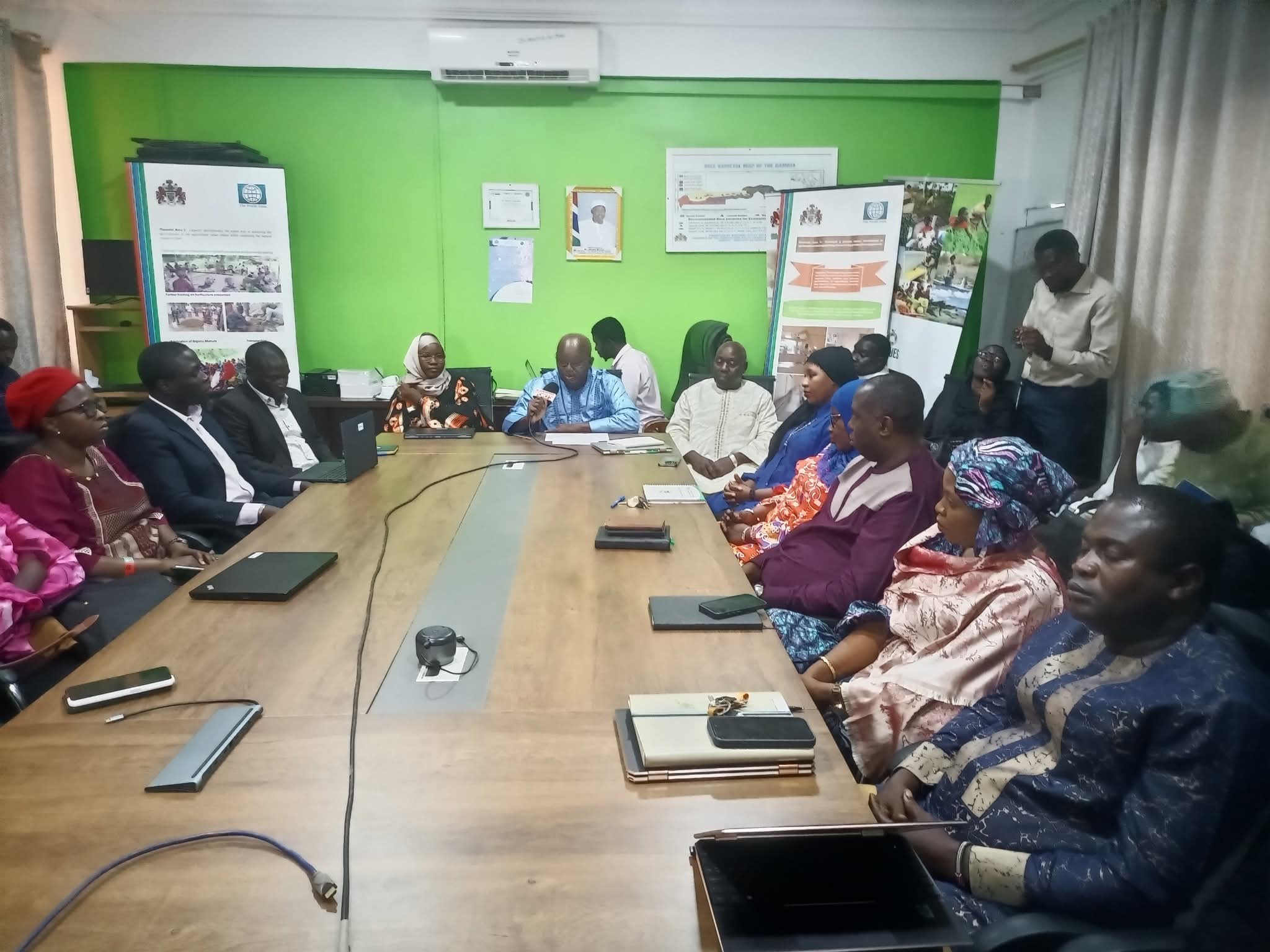
The Mansakonko Area Council recently presented six motorbikes to revenue collectors within the Lower River region at a presentation ceremony held at the council's office in Soma.Moving to increase revenue, the council has purchased six motorbikes for over six hundred thousand dalasi, for tax collectors, allaying a major need slowing revenue uptake.After a series of meetings organised by the council, authorities say they realised that one of the key issues is the lack of mobility, among other challenges affecting revenue collectors.Council members say the lack of mobility for revenue collectors has had a telling effect on productivity, leading to low revenue performance in the Lower River Region for the past years.In 2024 the council collected less than sixty-five percent of the revenue, members revealed. Mustapha Jagne, Finance Manager of Mansakonko Area Council, believes the council will register tremendous achievements in revenue collection in the coming years.Mansakonko Area Council chairperson said, with these motorbikes, he believes their collectors will be able to collect enough tax for the implementation of their development projects. (Picture MAC)Speakers at the event include the Deputy Governor of Lower River Region, Momodou Lamin Camara, who described the initiative as a vital move for the council while urging the people of LRR to pay their taxes “on time.”Buwa Kinteh, head of Admin at Mansakonko Area Council, described the motorbikes as critical working tools for the collectors within the six districts of the region and further challenged them to use the Motorbikes for their “intended purpose” to improve their work.Reminding revenue collectors of their role as key stakeholders, Landing B. Sanneh, the Chairperson of Mansakonko Area Council, said more than six hundred thousand dalasi was spent in purchasing the six motorbikes to create more revenue for the council.Sanneh further highlighted the impacts of poor revenue collection his council has been facing for the past years, saying it will immensely help the council to effectively collect taxes and plough it back to the “welfare of the taxpayers, among other needs.”The formal handover was presided over by the deputy governor and the chair of the council in the presence of Members of the Technical Advisory Committee and regional councillors who described the initiative as a critical development for the council.

Continue Reading >>
News First slide

POLICE IN URR STRENGTHEN EFFORTS AGAINST CHILD TRAFFICKING

In a concerted effort aimed at combating child trafficking, more than a dozen police border officials and community members have undergone training focused on child smuggling and trafficking. This initiative, supported by the Office of the High Commissioner for Human Rights, was conducted at the Regional Education Directorate in Basse, Upper River Region (URR). Similar training engagements are anticipated to be implemented in the Lower River and North Bank regions.The three-day training underscores renewed efforts to enhance border security and law enforcement measures aimed at tackling child trafficking.During the assembly, Police Prosecutor Alpha Badjie emphasized that the training is designed for police officers stationed at border entry points to improve their understanding of the complexities surrounding child smuggling and trafficking.Ismaila Badjie, representing the Police Commissioner, highlighted the significance of capacity building. He stated that equipping police officers with essential knowledge regarding child trafficking and smuggling will facilitate their efforts in addressing this serious issue.Mrs. Marie Adams, the National Project Coordinator of the United Nations High Commissioner for Human Rights, noted that a crucial aspect of the training involves community engagement, which she described as both timely and necessary.Mrs. Adams further explained that the Office of the High Commissioner for Human Rights aims to strengthen child protection systems in The Gambia, recognizing the substantial progress achieved in supporting these systems.Musa Conteh, representing the URR governor, reaffirmed the region's commitment to combating all forms of trafficking of children and women, calling attention to their status as the most vulnerable groups in society.Since its inception in 2019, this project has implemented numerous impactful interventions for children and victims of human rights violations. The Child Welfare Unit of the Gambia Police Force continues to renew its commitment to addressing child smuggling, trafficking, and gender-based violence within the country.

Continue Reading >>
News First slide

CITIZENS ENGAGE WITH PARLIAMENTARIANS ON OPERATIONS OF NATIONAL ASSEMBLY AT PARLIAMENTARY OPEN DAY FORUM

The National Assembly of The Gambia, in collaboration with the Westminster Foundation for Democracy, hosted the fourth edition of Parliamentary Open Day forum at the assembly grounds in Banjul.Launched in 2022, the legislative Open Day Forum serves as a vital platform for legislators to engage with the public and share their ongoing efforts to enhance the lives of the citizenry. It also gives them an insight into parliamentary processes and understand the roles parliament plays in shaping the governance of the country.Themed “Bringing the parliament closer to the people.” The day availed the public an invaluable opportunity to ask questions and concerns regarding significant matters that directly impact their lives.Khalifa M.M. Mbye, clerk of the National Assembly, said dialogue between people will help entrench democratic culture and strengthen dialogue between lawmakers and the citizenry. “Parliament is the heart of democracy. Its effectiveness depends on how well it remains connected with the people.” He noted.The program was made possible through the collaboration between the National Assembly of The Gambia and the Westminster Foundation for Democracy, a body dedicated to strengthening democratic culture around the world.Its country director, Tabu Njie Sarr, noted that the initiative will not only promote transparency and accountability but will alsol pave the way for constructive collaboration between legislators and the constituents they serve, anchored on a common desire to bring about positive change and progress.The event was attended by high-profile dignitaries. Among them the Deputy Speaker of the National Assembly, Honourable Seedy S.K. Njie and the Deputy British High Commissioner to The Gambia, Martin Norman. The duo emphasized the event's significance, describing it as a Commendable step to strengthening democracy. “It's through engagements like this that democracy strives, justice is built, and governance is strengthened,” Norman said.The important event was characterized by a question and answer session, with citizens posing questions revolving around parliamentary business. The most prominent among them focused on Laws and Amendment procedures in the legislative process.“This day shows that members of the National Assembly are continuously putting the people first in the performance of their duties and responsibilities. In addition to this Open Day, we shall be launching the annual speaker's seminar lecture series. This will be a platform for rigorous and thought-provoking debate on matters of the legislature,” the Deputy Speaker stated.The Legislative Forum helps ensure that the voices and perspectives of the public are heard and considered in the legislative process.

Continue Reading >>
News First slide

PRESIDENT BARROW PRESIDES OVER THE DECORATION OF TWO NEWLY PROMOTED GENERAL OFFICERS

His Excellency, Adama Barrow the President and Commander in Chief on Thursday oversaw the swearing in of new members of the Gambia Armed Forces Council and also decorated two newly promoted General Officers at a ceremony held at the State House. The newly promoted Commanders of the Gambia Navy and the Republican National Guard were decorated with their new ranks following their promotion by the President and Commander-in- Chief of The Gambia Armed Forces H.E Adama Barrow.Commodore Sambu Barrow, now heads the Gambia Navy whilst Brigadier General Yahya Drammeh is the new Commander of the Republican National Guard, which comprises the Gambia National Guards at Fajara and the State Guard Battalion at the State House.Commodore Sambu Barrow enlisted into the GAF 30 years ago and rose through the ranks to become the Naval Chief. Trained in Nigeria, the United Kingdom, Pakistan and Ghana, the navy Commandant boasts of an enviable track record in the Armed Forces holding several key positions and also serving in various peacekeeping operations in Sudan, Sierra Leone and Liberia.Brigadier General Yahya Drammeh is also a highly experienced officer who joined the army in 1996. Following extensive training in Nigeria, Ukraine, and the US, Brig. Gen. Drammeh is one of a few number of Gambian military officers who is a certified flight instructor and a pilot. Prior to his promotion, General Drammeh had served as the Commander of the 3rd Infantry Battalion at Farafenni and later as the Commander of the Gambia National Guards at Fajara. He had also served as the Aide De Camp (ADC) to the President of the Republic.After taking the prescribed oaths, confirming their appointments as chiefs of the two military branches, the two officers formally assumed their roles as members of the Armed Forces Council which is chaired by the Vice President H.E Muhamed BS Jallow. Other notable members of the Council are the Deputy Chief of Defence Staff, the Commander of the Gambia National Army, Brigadier General Sait Njai, Rtd. Admiral Sarjo Fofana and Professor Cernu Omar Barry. One after the other, the council members took the three oaths of office, allegiance and secrecy, they signed the oath registry before they were warmly congratulated by the President.Commodore Sambu Barrow, now head of the Gambia Navy and Brigadier General Yahya Drammeh the new Commander of the Republican National Guard taking their oaths of office, allegiance and secrecy.Lieutenant General, Mamat O. Cham, the Chief of Defence attributed the enormous transformation of the Armed Forces to the visionary leadership of President Barrow. Over the last 8 years, the army chief noted with appreciation what he called ‘President Barrow's unwavering commitment to the development of GAF and the welfare of the men and women in uniform.’ The appointment of these new council members, Lt. General Cham added, will positively impact the Armed Forces as it continues to evolve into a dynamic, professional, and dedicated service.These views were shared by Serign Modou Njai, the Minister of Defence, who advised the newly promoted officers to be loyal, disciplined, and committed. As service chiefs, Defence Minister Njai urged the two Generals to ‘provide the strategic leadership’ required to navigate the security challenges they will face.The Vice President Muhammed B.S. Jallow, who is the chairperson of the Armed Forces Council pledged to perform their functions as required by the constitution to strengthen the governance structures of the Gambia Armed Forces.H.E Adama Barrow, the president, congratulated the officers on their promotions, urging them to work as a team to meet expectations and measure up to the trust and confidence reposed in them. The Commander in Chief reminded the officers that promotion comes with added responsibility, and as such, they should provide the strategic leadership for the development of the Armed Forces.To the Armed Forces Council, President Barrow called for synergy with the relevant government ministries and agencies to ensure effective and efficient implementation of their mandate, as stipulated by the constitution.The President finally commended the Chief of Defence Staff and the GAF high command for their loyalty, professionalism, and dedication, and reassured them of his government's ‘unwavering commitment to the development and welfare of the Armed Forces.’The Armed Forces Council which is chaired by the Vice President, comprises service chiefs, a retired military officer and a civilian to advise the president on military related issues, shape strategic direction of the Armed Forces and provide other oversight functions.

Continue Reading >>
News First slide

SENEGALESE AND IRANIAN AMBASSADORS PRESENT LETTERS OF CREDENCE TO PRESIDENT BARROW

Her Excellency, Mariama Sy, the High Commissioner designate of the Republic of Senegal and His Excellency, Hassan Asgari, the ambassador designate of the Islamic Republic of Iran presented their letters of credence to president Adama Barrow at State House in Banjul. The two diplomats renewed their commitment and determination to promote the excellent relations between their respective countries and The Gambia.The new Senegalese High Commissioner designated to The Gambia H.E. Mariama Sy was the first to arrive at the presidential palace. She was greeted by a detachment of the State Guard Battalion for the formal presentation of her letters of credence.After inspecting the Quarter Guard, Mrs Sy was escorted to chambers where the President, H.E. Adama Barrow accepted her letters of credence, confirming her appointment as High Commissioner of the Republic of Senegal. Speaking to reporters after the presentation, High Commissioner Sy acknowledged the excellent fraternal relations between Senegal and The Gambia. ‘I will ensure that we work together on all the sectors to ensure development.’Given the socio-cultural similarities between the two countries, High Commissioner Sy said she sees The Gambia as her home and will strive to build on the already strong collaboration and partnership as directed by the two heads of state. ‘I will work to strengthening security, economic, education, and cultural cooperation.’The ambassador designate of the Islamic Republic of Iran H.E. Hassan Asgari was also received with full honours at the State House.The ambassador designate of the Islamic Republic of Iran H.E. Hassan Asgari presenting his letters of credence to H.E. Adama Barrow at the State House in Banjul After the usual welcome ceremony by the State Guard Battalion, he also presented his letters to President Barrow. The Gambia and Iran reestablished diplomatic relations after nearly a 10-year break. Ambassador Asgari believes this provides a new opportunity for the two countries to widen their cooperation for a mutual benefit.‘We will try our best to promote and deepen our relationship economically, politically, culturally and religiously, industrially, and other fields,’ He said.The Iranian ambassador further reassured that the Islamic Republic would support The Gambia's leadership of the OIC and thanked President Barrow for championing the peace and cooperation amongst Islamic countries.

Continue Reading >>
News First slide

VP JALLOW ATTENDS CONSIDERATION OF NATIONAL SECURITY BILL 2024

His Excellency Mohammed B.S Jallow, Vice President of The Gambia, appears before national assembly members for the consideration of the National Security Council Bill 2024. The consideration of the National Security Bill follows it's successfully passing of the second readings by the National Assembly.The formation of a security council is viewed by deputies as a highly effective measure to address past security deficiencies, including the lack of Joint Central Co-ordination security for placement and intelligence gathering, leading to significant vulnerabilities.Drafting of this bill and its subsequent enactment launches the journey towards the rebuilding of national security. The provisions in the bill strategise plans to expand the national security apparatus, individual safety, and new human-centered security.The national security policy of The Gambia projects a nation with a professional and apolitical security system, able to protect the country and its people in line with fundamental human rights and rule of law.The Bill alludes to similar ideals of guaranteeing the protection of rights and liberties as enshrined in the constitution of The Gambia, reaffirming the government’s commitment and political will to implement the security sector reform process, aiming to strengthen the national security architecture.This Bill seeks to establish a robust framework for a well-structured and coordinated national Security Council, ensuring that security strategies are comprehensive, inclusive, and reformed to tackle evolving threats and challenges.To address current gaps in coordination among various security agencies, the Bill emphasises the importance of inter-agency coordination and communication to support the effective functioning of national security mechanisms for a sustainable democracy.The Office of the National Security was established in 2017 by President Adama Barrow with the ultimate objective of improving security sector responses to the needs of Gambian people.

Continue Reading >>
News First slide

PRESIDENT BARROW HOLDS TALKS WITH MEMBERS OF THE ACCESS TO INFORMATION COMMISSION

His Excellency Adama Barrow, President of the Republic of The Gambia, has received in audience members of the Access To Information Commission at the State House on Tuesday. Commissioners led by Neneh Macdouall Gaye, the chairperson of the ATI Commission, called on the president to update him on the Commission's activities and also seek his government's support.Speaking to GRTS after their audience with President Barrow, Neneh Macdouall Gaye disclosed that since its establishment in September last year, the Access to Information Commission is now working to set up its structures to fulfil its mandate.‘It’s one thing passing the law, but another thing implementing the law. We thought we would come to the president and tell him where we are, what we are doing, and to seek his support in our mandate to implement the law.’‘The main information holders would be the government, and the requesters would be the public. And this law is for everybody. So if we have the support of the executive, it will make the job much easier, and the implementation would be successful,’ the Commission's chair said. Commissioners headed by Neneh MacDouall-Gaye, former broadcaster and foreign minister, Babucarr Cham, Bai Emil Touray- former GPU president, John Charles Njie, and Ya Amie Touray-legal practitioner, all membersMrs. Macdouall-Gaye further commended the president for the political will in making access to information a reality in The Gambia and reassured that the Commission will work to meet the expectations of the Gambian people.‘We are working on our internal processes. We have done our work plan. We have gone on a study tour and we are now working on a sensitisation programme which is very key. We are looking for the funding for that.’‘We want to embark on a nationwide campaign to sensitise the public about Access to Information, the rights of people and also the rights of information holders,’ she added.The Commission was established by the government in September 2024 to facilitate public access to information from the government, its institutions, and agencies.

Continue Reading >>
News First slide

“TOURISM CAME TO US; WE DIDN’T GO FIND IT”: GRTS EXAMINES GENESIS OF GAMBIAN TOURISM DEVELOPMENT & PROSPECTS

The Gambia, known for its rich heritage and cultural diversity, is a magnet to tourists seeking to escape the harsh winter weather and stretch out on tranquil beaches and enjoy the warmth provided by the sun and friendly people.The beginning of tourism in the Gambia can be traced as far back as the mid-1960s, shortly after the country gained independence from Britain.Reliable accounts have it that tourism in The Gambia started by accident when a Swedish gentleman called Bertil Harding, who was travelling from Northern Senegal to the Northern part of the neighbouring country, lost his bearing and drove towards Banjul. Harding, according to accounts, was amazed by the beautiful coastline and the friendly people, and as a result, decided to stay for a couple of days, thus marking the discovery of the popular tourist destination that would later assume the name “the smiling coast of Africa”.Samba Batch Faye, Board Chairman of the Gambia Tourism Board, and Sheikh Tijan Nyang, Head of the Institute of Travel and Tourism of the Gambia, both confirmed that was what set off the development of tourism in the Gambia and led to a steady increase in the number of visitors as “tourism came to the Gambia” instead of the Gambia “going to find it.”"He was driving to Casamance to go to Cap Skirring and other places. In our conversation when he was alive, he said he drove overnight until in the morning, he saw Denton Bridge, then he said, well, I don't think I am in Casamance; I must be in the Gambia. Instead of turning around and finding his way to Casamance, he said, "Let me just go in and find out what Gambia is like," Samba Batch, Chairman of Gambia Tourism Board, said.By the late 1970s and 1980s, the Gambia had established itself as a prime tourist destination, and with an increasing number of hotels and resorts lining the coast and a surge in the number of tourists, the need for increased investments became apparent, effectively drawing in Swedish and European investorsInitially, the structures that were used to accommodate tourists were not custom-built. However, what followed were proper hotels built by foreign investors in tandem with the Gambia government, which at the time saw the huge potential that existed when the Gambian tourism development was in its infancy stage."There was only one hotel & that was the Atlantic Hotel. He went and checked in at the Atlantic Hotel. In the morning, he walked around the beach. That time Atlantic Beach was at least 100 meters of white sand on the beach as opposed to its current state.” “He walked around and found only a few people. By then, people were not keen on going to the beach. All that they were interested in was going through the wharves and fishing for crabs. And he said, "Well, this seems to be a nice place. Let me stay for a few more days,” the GT-Board chair added.With the rise of tourism, the demand for well-trained staff to work in hotels and restaurants and serve as tour guides became necessary. Then, emerged Gambia Hotel School, which was later upgraded and renamed "Gambia Tourism and Hospitality Institute".Others, like the Institute of Travel and Tourism in the Gambia, were born to cater for the ever-increasing need for trained human resources and seasoned professionals.Sheikh Tijan Nyang, a veteran in the tourism sector, who saw it and witnessed the evolution, weighs in on the gains made by the sector"It came in as an accidental industry that had no policies that would guide it to where it is today. As a result of it, the government thought it wise and had key people in key positions. People who were knowledgeable and they thought it is good to look at good examples.”“If I remember talking to the late Tom Senghore, he and the late Tapha Sosseh were permanent secretaries at various ministries. They went to Kenya from what I gathered from Tom Senghore. They did a case study in Kenya as to how it developed to where it is today, and they came and wrote a report. After that, the Bafuloto studies form the basis of our tourism development," said Sheikh Tijan Nyang.The Bafuloto studies were designed to understand traditional Gambian society and to unearth the hidden potential of community tourism. Now, with stiff competition, Nyang believes the sector needs urgent reforms and more investments in eco - and community-based tourism to ensure sustainability. "We have developed, but we also have a series of challenges that we need to address. Most of the countries in the sub-region do not operate the same system as we do. We depend entirely on package stores.”“The industry is seasonal, and it starts from October to April, and that's where it ends. We have been operating in this system since the inception of tourism, and I think we have seen it gradually diminishing." Nyang stated. Tourism is one of the sectors that help the Gambia maintain a level of buoyancy, but with many destinations seeking to outdo or attract tourists from the same source markets, there is a need to return to the drawing board to reposition and repackage Gambian Tourism so it can continue to attract tourists from across the world. 

Continue Reading >>
News First slide

WOMEN LEADERS CALL FOR GENDER EQUITY AS THEY CELEBRATE INTERNATIONAL WOMEN'S DAY

Influential women in The Gambia amplified their voices, calling for gender equality as they joined the Ministry of Gender, Children and Social Welfare to march in unison in celebrating the 2025 International Women's Day held in Banjul. This year's commemoration marks the 30th anniversary of the Beijing platform of action earmarked to enhance women's empowerment. Reminding world leaders of commitments they took to elevate the status of women in 12 critical areas of concern, officials and national stakeholders discussed strategies, objectives and actions needed to uplift women and girls. Fatoumatta Bah Barrow, the Gambia’s First Lady, who presided over the event, described the day as a reminder of the women's crusade for more equality in society, which she said requires a strategic commitment, undertaking policies and programmes that reduce poverty, improve healthcare and education. ‘We must act with urgency to create a future that guarantees equality, dignity and opportunity for all,’ she said.Fatou Kinteh, the Minister of Gender, Children and Social Welfare, and Rohey Malick Lowe, the Mayor of Banjul, both underscored the importance of gender equality and rights promotion especially for women with disabilities.‘I reaffirm my unwavering commitment to continue advocating for policies and programmes that uplift all women and girls, particularly those with disabilities. Let us work together to build a nation where every woman and girl can achieve their full potential,’ the Minister said.‘We are the breadbasket of Africa. Without us, things will not move, and that's the reality. The Ministry cannot do it alone, we have to come together, show solidarity to each other and make sure we stand firm to elevate Gambian women’, the Mayor stated. The commemoration of the 2025 IWD, was attended by top diplomats like Karl Frederick, Head of the UN Mission in The Gambia, who said this year's subject is not just about celebrating women. But also, ‘a call to recognise the connection between gender and disability, to amplify the voices of those who have been silenced and to dismantle the barriers that have held back too many for too long.’Themed ‘Accelerate Action for Gender Equality’, the commemoration of International Women's Day comes amid critical advances strengthening women's rights and equitable access to education and crucial socio-economic opportunities.

Continue Reading >>
News First slide

STRENGTHENING HEALTHCARE DELIVERY: UNFPA & HSA HAND OVER MEDICAL EQUIPMENT TO HEALTH MINISTRY

The Ministry of Health recently received a consignment of medical equipment from the United Nations Fund for Population Affairs (UNFPA) and the Health Security Agency(HSA) based in the United Kingdom. The donation is earmarked to strengthen efficacy in healthcare services across the country.The medical equipment includes a consignment of 60 delivery beds, five anesthetic machines, 10 oxygen containers and 1000 dignity beds amongst a host of others procured through the China Aid Project, aimed at strengthening effective healthcare services across the country.Ndeye Rose Sarr, the UNFPA country representative said ‘UNFPA will reaffirm its unwavering commitment to supporting the government of the Gambia in the provision ofessential health services, especially for representative health and rights of women.’The handing over of these medical items also marks the culmination of the china aid Project, which has been providing support mechanisms in diverse areas building human capital including sexual and reproductive health services and protection of healthcare workers during the COVID pandemic.The Chinese ambassador to the Gambia, Liu Jin, said, China is one of the strongest development partners of Gambia. The ambassador added that since 2020,’ the Chinese government has donated six million dollars worth of assistance to the Gambia’s healthsector, in the form of projects and medical equipment supplies.’Doctor Ahmadou Lamin Samateh, Gambia’s Health Minister hailed the Chinese missionin the Gambia and UNFPA for the support he said will ‘ease critical healthcareconditions.’‘The items we received here are remarkable. 60 delivery beds, that's very big. What that means is that, these women now can deliver on a proper delivery bed. The staff will beable to deliver the women without straining their back, that has been a very difficult thingin this country,’ he added.In a separate but similar engagement the National Public Health Laboratory under the auspices of the Ministry of Health, also received a consignment of bio safety and lab equipment from the Health Security Agency based in the UK.Sheriffo Jagne, the director of the National Public Health Laboratory said the donatedlab items will critically uplift the capacity of bio laboratory services.Dr Bunmi Negedu Momoh, speaking at the handover ceremony on behalf of the UKHealth Security Agency said her organisation is committed to supporting sustainable development in the Gambia.The medical equipment handed to the Health Ministry will significantly complement the government's efforts to improve health services, curtailing the burden of inadequate medical care and emergencies across various hospitals in the country.

Continue Reading >>
News First slide

STATE-OWNED ENTERPRISE COMMISSION VISITS GRTS

The State-Owned Enterprise Commission (SOE) Commissioners, who are on a fact-finding mission, visited the Gambia Radio and Television Services to understand the achievements and challenges facing the National Broadcaster in its mandate to provide services to the public. Charles Mustapha Camara, the Board Chair of GRTS, who received the delegation at the GRT headquarters on the MDI Road in Kanifing, hailed the partnership between GRTS and SOE Commission as invaluable, highlighting the importance of the visit.‘This visit provides us with an opportunity to share our progress, challenges and vision for the future. We look forward to receiving your guidance, suggestions and continuous support as we strive to improve our services and expand our reach in this rapidly evolving media landscape,’ he said. ‘We are committed to maintaining the highest standards of professionalism and ethical journalism. We are continuously innovating, striving for excellence and ensuring that our services remain accessible to all Gambians regardless of their location, background or social status’ the Board Chair added.After a closed-door meeting, GRTS officials took commissioners on a tour of the technical operation units where the team inspected the studios, control room and data centre. Ousainou Ngum, the chairman of the SOE Commission, shared positive impressions of the National broadcaster. ‘It has been a source of huge education for us. We certainly had an image of GRTS before we came, but seeing what they work with, they are managing to modernize in a not-so-modernized world, and they are doing so diligently and delivering quality programming in that process. That has been quite moving for us’ he stated. The commissioners also visited the State Broadcasters radio station at Mile 7, to inspect the country's first broadcasting outfit that was established in 1971.The visiting delegation toured the radio facilities, which are also grappling with age-old machines unable to catch up with modern-day broadcasting. SOE Commissioners were able to gather first-hand information on efforts to transform and modernize GRTS operations amidst obsolete equipment and financial constraints. ‘Our task is to make sure that whatever service is provided is fit for purpose for the population of which we are also part. We are all citizens who benefit from these services so we need to make them work for the benefit of everyone.’‘We have come, listened and learned. We will go and incorporate that, have a conversation among ourselves and come back to them. It's an ongoing conversation to build better for the future,’ Ousainou Ngum said.At the end of the tour, SOE Commissioners reflected on the historic contributions of the radio, as the main source of news, current affairs and entertainment for audiences across the country. Both sides expressed a stronger commitment to deepening collaboration to address pressing challenges facing the national broadcaster.The SOE Commission was established in 2023 through an act of parliament with an oversight mandate to oversee, regulate and support the effective management of the twelve state-owned enterprises in the Gambia, of which GRTS is part. 

Continue Reading >>
News First slide

2025 HAJJ PACKAGE PEGS AT D525,000

The National Hajj Commission has set the 2025 Hajj package at five hundred and twenty-five thousand dalasi.

Continue Reading >>

Latest Updates

News First slide

PRESIDENT BARROW INAUGURATES LANDS, LOCAL GOVERNMENT COMMISSIONS TO TACKLE DISPUTES, BOOST DECENTRALISATION

The President, His Excellency Adama Barrow, on Monday presided over the inauguration and swearing-in of members of the newly established Lands Commission and the Local Government Service Commission at a ceremony at State House.  The two Commissions, comprising veteran civil servants,  have the onerous task of strengthening land governance and management in the country as well as resolving disputes related to land. The Lands Commission is headed by Raymond Sock as Chairperson,  Kebba Njie, Babucarr Mbye, Abdoulie Manneh and  Juldeh Ceesay all as members. One after the other, they all took the two oaths of office and secrecy, conducted by the Deputy Secretary to the Cabinet, Momodou Dibba.They later signed the oath registry officially confirming their appointments. Four other officials were also sworn in to the newly established Local Government Service Commission. Former Police chief and Interior Minister Yankuba Sonko heads this Commission which also has Abdoulie Sallah, Saffie Lowe and Bahyda Hydara as members.They also took the prescribed oaths of office and secrecy,  before signing the oath book.Speaking on behalf of the two Commissions,  Raymond Sock expressed gratitude to the President for the trust and confidence reposed in them, and pledged to live up to expectations. The President described these vital institutions as “integral components of the governance process”  that will “reinforce and add value to the nation's land and local government structures.”He disclosed that the commission has a wide mandate which includes “modernising land records, resolving disputes,  promoting equitable access to land and aligning land management practices” with broader national development goals.On the creation of the local government service commission,  President Barrow said this Commission will “strengthen democracy and decentralisation” as it will operate at the level closest to the ordinary people.The President congratulated the Commissioners and thanked them for accepting this responsibility. As veteran civil servants who have served the government at the highest levels, President Barrow said the Commissioners have the “experience,  integrity and professionalism to deliver up to expectations.”He reassured that his government will give them all the support and encouragement to succeed,  and urged all stakeholders to work with the two Commissions to ensure “fair, impartial and equitable management of land.”

Continue Reading >>
News First slide

VP JALLOW LAUNCHES FSQA'S STRATEGIC PLAN 2026-2030

His Excellency Mohammed B.S. Jallow, the Vice President, presided over the launch of the Food Safety and Quality Authority's (FSQA) Strategic Plan for 2026-2030 at the Sir Dawda Kairaba Jawara International Conference Centre in Bijilo. This strategic plan outlines the Authority's vision, strategic priorities, and key interventions aimed at strengthening food safety and quality systems, enhancing regulatory effectiveness, and safeguarding public health in The Gambia over the medium term.The landmark event gathered key stakeholders from the government, development partners, and the private sector, highlighting the government's commitment to ensuring that citizens have broad access to quality and safe food.Momodou Bah, the Director General of FSQA, explained that this initiative aims to meet the required standards while the FSQA continues to develop national regulations. “We have an Act from 2011, regulations started in 2021, a policy was established in 2024, and now we have developed a strategic plan in 2025. This progression sharpens our focus to ensure we are fulfilling the mandates of the government,” Bah stated.This marks the beginning of a transformative journey, as food safety regulations become increasingly important in ensuring the well-being of every individual.Dr Amadou Sowe, the FSQA Board Chair, emphasised that the successful implementation of the plan will require strong government support. “This ambition will demand sustained investment, strong political will, and unwavering commitment from all stakeholders. Strategic plans don’t implement themselves; they require leadership, discipline, resources, and collective ownership,” Dr Sowe remarked.Immaculada Roca i Cortés, the European Union Ambassador to The Gambia, reiterated the EU's commitment to supporting FSQA. She expressed satisfaction in contributing to a stronger regulatory framework, a more effective inspection and control system, and enhancing technical capabilities.Reports indicate that foodborne illnesses cause an estimated 137,000 deaths annually in Africa, with productivity losses exceeding $20 billion.Public Service Minister Baboucarr Bouy assured FSQA of their support as policymakers while urging all stakeholders to back this initiative. “I urge all stakeholders to rally behind FSQA and support the effective implementation of this Strategic Plan. By doing so, we will not only protect the health of our people but also unlock opportunities for Gambian products to thrive in competitive markets,” Minister Bouy said.In his launch statement, Vice President Mohammed B.S. Jallow described the FSQA Strategic Plan as the result of rigorous analysis, broad consultation, and honest self-reflection. “It is a plan that is both nationally rooted and internationally aligned,” he remarked.Vice President Jallow characterised the moment as one of “genuine national significance,” stating, “The food we eat is not merely a matter of personal choice; it is a matter of public health, economic security, and national dignity.”An estimated GMD 188.1 million is required for the implementation of the strategic plan over the next five years. H.E. Mohammed B.S. Jallow called on the Ministry of Finance, development partners, and the private sector to recognise food safety as “not a cost, but an investment in public health, economic competitiveness, and The Gambia's reputation as a reliable source of safe, high-quality products in regional and international markets.”The new strategic plan commits to strengthening FSQA's institutional and operational systems, prioritising financial sustainability and resource mobilisation, risk assessment, inspection, surveillance, and enforcement.Additionally, it aims to modernise laboratory services and digital infrastructure, while deepening stakeholder engagement and public awareness.Strategic plans are not just documents; they serve as critical guides for institutions. Their clarity and effectiveness dictate how well these institutions strive to fulfil their purpose.Now that the plan has been launched, the focus will shift to its implementation, which is anticipated to enhance The Gambia’s international recognition in global food markets.

Continue Reading >>
News First slide

VP JALLOW HOSTS FLURRY OF COURTESY CALLS: UNITY, AUTISM, STUDENT NURSES TOP AGENDA

A flurry of activity took place as several associations paid a courtesy call on His Excellency Mohammed B.S. Jallow, the Vice President of The Republic of The Gambia, to introduce their groups and explore potential areas for cooperation.The first to arrive were members of the 'I Am Gambian Association,' a movement dedicated to fostering unity and national pride in the pursuit of sustainable national development.Famara Manka, the President of the association, explained the focus of their visit after a closed-door discussion with Vice President Jallow. He stated that the association, founded last year, is committed to expanding its reach across the country to achieve its goals. "I Am Gambian Association is dedicated to bringing Gambians together. We aim to overlook our tribal, religious, and cultural differences and embrace the belief of 'I am a Gambian,'" he added.(Members of the 'I Am Gambian Association. PC: OVP)Shortly after noon, the Vice President welcomed members of the Gambia Autism Support and Advocacy Network, who visited to highlight their work and seek stronger collaboration with the government.Following some preliminary formalities, the group engaged in closed-door talks with Vice President Jallow and his top officials. They discussed issues ranging from raising awareness to inclusion and support for individuals with autism and their families.Abdou-Majid Jallow, the National Coordinator of the Gambia Autism Support and Advocacy Network, described the purpose of their visit. "We aim to involve the Vice President in raising awareness and advocating for people living with autism in this country, as there is still a significant amount of stigma and misconception surrounding it," he said.(Members of the Gambia Autism Support and Advocacy Network. PC: OVP)The day's courtesy calls concluded with a meeting of the Gambia Student Nurses Association.After engaging with Vice President Jallow and his senior officials, Maha Sowe, the president of the Gambia Student Nurses Association, outlined their discussions, noting the Vice President's strong support for their cause."The Vice President is considerate and genuinely wants to help Gambian students, especially student nurses. He assured us that his office would see what assistance they could provide."(Members of the Gambia Student Nurses Association. PC: OVP)These organisations are hopeful that they can rely on the Office of the Vice President for stronger government support moving forward.

Continue Reading >>
News First slide

PRESIDENT BARROW PRESIDES OVER UTG’S 18TH CONVOCATION AS 1,633 STUDENTS GRADUATE

President H.E. Adama Barrow presided over the 18th convocation ceremony of the University of The Gambia at the Faraba Banta campus. The event celebrated the graduation of 1,633 students, making it the largest graduation in the university's history. The ceremony was attended by special guests, government officials, and students. This year's convocation was historic, featuring high-profile attendees such as Dr Akinwumi Adesina, former President of the African Development Bank, and Prof. Dauda Ngom, Senegal's Minister of Higher Education, Research, and Innovation. The Vice Chancellors of three universities from Senegal, Ghana, and Nigeria were also present at the ceremony.Professor Momodou Mustafa Fanneh, Chairman of the Governing Council of the University, described the convocation as a defining moment in the university's life, emphasising the preparation of these young men and women for a future beyond the classroom. He challenged the graduates to utilise their knowledge and experience to contribute positively to the development of society and the nation.Vice Chancellor Prof. Herbert Robinson stated that this convocation is a testament to the growth and resilience of the University of The Gambia, which now features a modern campus equipped with state-of-the-art facilities conducive to teaching and learning. He attributed the record graduation rate to the expansion of university infrastructure and programs.Prof. Robinson congratulated the graduates for their hard work, resilience, and dedication, assuring them that the university would continue its path of reform, expansion, and innovation to meaningfully contribute to the development of the country.Prof. Dauda Ngom, Senegal's Minister of Higher Education, spoke about the longstanding partnership between their institutions, urging Gambians to take advantage of scholarship opportunities to study in Senegal.Dr Akinwumi Adesina, one of the two special guests, expressed his pleasure in being associated with the university, praising the developments that have transformed the country in recent years. As a lifetime partner of The Gambia, he felt honoured to have a school named after him, the School of Agriculture and Environmental Sciences, recognising his contributions to Africa's development.He pledged to establish an initial endowment of $250,000 to support education, scholarships, and faculty and staff, while also promising to make the university a global centre of excellence. His message to the graduates emphasised the importance of being prepared to face the challenges of the future.In his convocation speech, President and Chancellor H.E. Adama Barrow congratulated the graduates, their families, and the university on this milestone. He noted that hosting such an event in Faraba Banta has become a national symbol of aspiration, strategic investment, and educational transformation.The President added that the convocation's theme, "Higher Education as a Strategic Bridge for Policy, Innovation, and Job Creation," aligns with The Gambia's development priorities. He challenged the graduates to use their knowledge to positively impact the country's development, emphasising that the nation looks to them for solutions to its challenges.President Barrow reassured attendees that his government will continue to invest in education, particularly in the higher education sector, to equip young people with the necessary knowledge and skills to realise their potential.At the conclusion of the ceremony, distinguished students were recognised for their performance, with Ebrima Sumareh emerging as the overall best graduating student for the cohort. Sumareh expressed his deep humility and gratitude for the award, urging his peers to serve the nation with purpose and determination.

Continue Reading >>
News First slide

PRESIDENT BARROW HOSTS COMMONWEALTH CHIEF, WOMEN’S CHAMBER IN BACK-TO-BACK STATE HOUSE MEETINGS

In a series of meetings at the State House, President H.E. Adama Barrow hosted Commonwealth Secretary-General Shirley Ayokor Botchwey and members of the Gambia Women's Chamber of Commerce on Wednesday.Secretary-General Botchwey was accompanied by Serign Modou Njie, the Minister of Foreign Affairs. After they met with the President, Botchwey stated that her visit was part of her tour of Commonwealth member states aimed at "strengthening cooperation" in areas of mutual interest.H.E President Adama Barrow with the Commonwealth Secretary-General Shirley Ayokor Botchwey. [PC: State House]She assured that the Commonwealth will continue to engage with The Gambia to support development, capacity building, and democracy. Additionally, she formally invited the President to the Commonwealth Heads of State and Government summit in Antigua later in November.In a separate meeting, the members of the Gambia Women's Chamber of Commerce updated the President on their activities and the challenges they face. Naffie Barry, the Managing Director of the Gambia Women's Chamber of Commerce, described the meeting as very productive, noting that they received strong reassurances of support from the Gambian leader.Photo session of members of the Gambia Women's Chamber of Commerce with H.E Adama Barrow [PC: State House]She expressed gratitude to the President for the audience and conveyed hope that the meeting would lead to positive outcomes for Gambian women.

Continue Reading >>
News First slide

PRESIDENT BARROW BRIEFED ON UTG CONVOCATION AS 1,600 SET TO GRADUATE IN FARABA

Officials from the University of The Gambia paid a courtesy call on the President, His Excellency Adama Barrow, at State House on Tuesday. The delegation was led by the Minister of Higher Education, Research, Science, and Technology and comprised the Vice Chancellor Professor Herbert Robinson, the Chairman of the Governing Council Prof Momodou Mustapha Fanneh and the Registrar Bobo Baldeh. They were at the State House to update the President,  who is also the Chancellor of the University on the upcoming convocation ceremony at the Faraba Banta campus, where over 1,600 students are expected to graduate after fulfilling all requirements in their different fields of study. Speaking to reporters after they met with President Barrow, Professor Herbert Robinson, the Vice Chancellor, disclosed that discussions were good and productive as they had agreed on all the details of the much-anticipated convocation ceremony later this weekend.Professor Herbert Robinson, the Vice Chancellor of the University of The Gambia  (pic: State House)“Over 1,600 students will graduate this year from the 9 schools of the University,  among them the first Doctoral graduates and graduates from the new school of Dentistry,” Professor Robinson added.The Vice Chancellor further expressed gratitude to the president and the Higher Education Minister for the support to the University, noting that the UTG has “seen massive investment and modernisation in infrastructure over the years” attributing this to President Barrow's “personal commitment” to the higher education sector.

Continue Reading >>