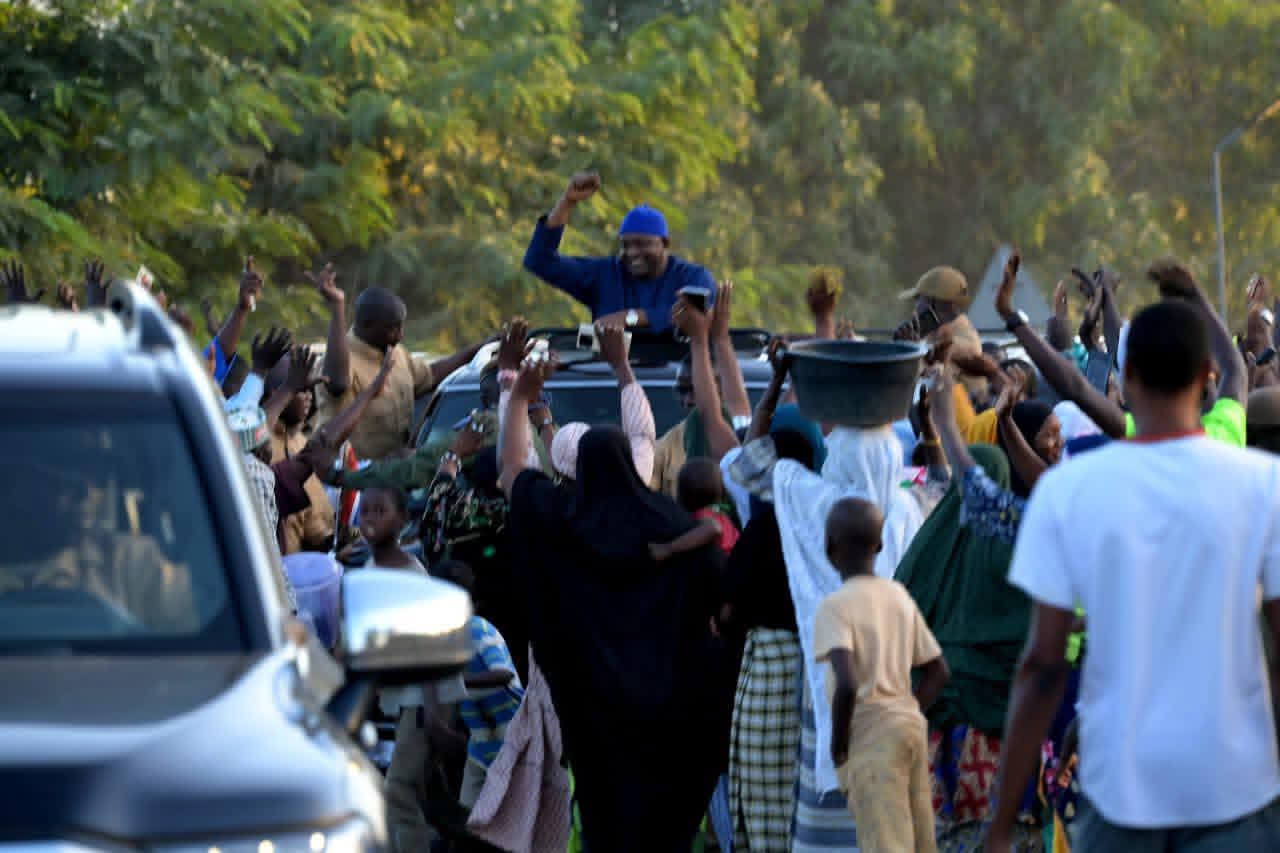
For the first time in the country's history, access to a reliable electricity supply is becoming a reality for ordinary Gambians across the regions.
Residents of Jah Kunda in Wuli West, Upper River Region, have expressed joy and gratitude for this life-changing development that has brought electricity to their village. They shared their excitement during the President's tour.
Jah Kunda is a remote settlement located about 50 km from the provincial town of Basse. It is one of over 700 rural communities now connected to the national electricity grid, marking a significant milestone in the government’s effort to achieve universal electricity access by the end of the year.

Bakary Kanteh, a lifelong resident of Jah Kunda, expressed how the arrival of electricity has transformed the village in unimaginable ways. “I was born and raised here," Bakary said. "Life without electricity was tough. With temperatures soaring to 40 degrees during this time of year, we had to spend 50 dalasis on an ice block. But now, all of this has changed because I can finally buy my own refrigerator.”
This sentiment was echoed by Mbara Kanteh, another resident of Jah Kunda, as well as Mamadou Bah, who lives in the neighbouring village of Mana Koto.
Lamin Makalo, a prominent opposition figure in Jah Kunda, also shared his thoughts. Despite his political disagreements with the president, he believes that rural electrification has brought significant benefits to the people. “It has transformed our lives, made life easier and better, and allowed us to enjoy modern conveniences.”
While the residents celebrate this new development, they commend President Barrow for these and other initiatives that have improved the region. With elections approaching, many believe the President has an advantage over his opponents and are committed to voting for the NPP.
1 Likes
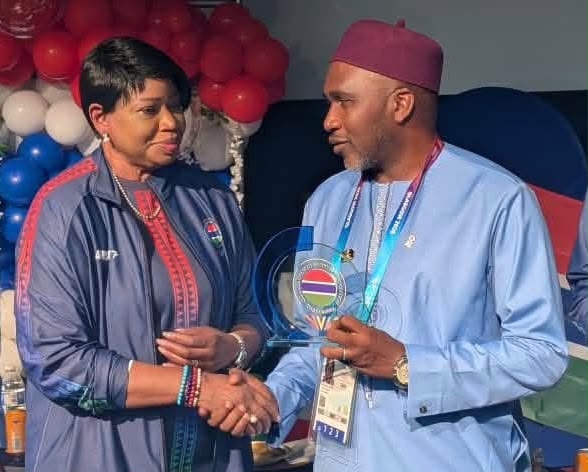
The Gambia National Olympic Committee has appointed Her Excellency Dr Fatou Bom Bensouda, High Commissioner of The Gambia to the United Kingdom, as its Goodwill Sports Ambassador.The appointment was announced during the Gambia Day Celebration in Glasgow, Scotland, in recognition of her outstanding contributions to Gambian sport, international diplomacy, and the promotion of Olympic values.A former national volleyball player and ex-Female Vice President of the GNOC, Dr Bensouda was praised for her leadership in promoting women in sport and advancing athlete welfare, integrity, and sports development.In her new role, she will help raise The Gambia's profile on the international sporting stage, strengthen partnerships with global sports organisations, and promote sports diplomacy to support national development.The GNOC states that the appointment reflects Dr Bensouda’s distinguished service to sport and her ongoing commitment to inspiring future generations of Gambian athletes and sports leaders.
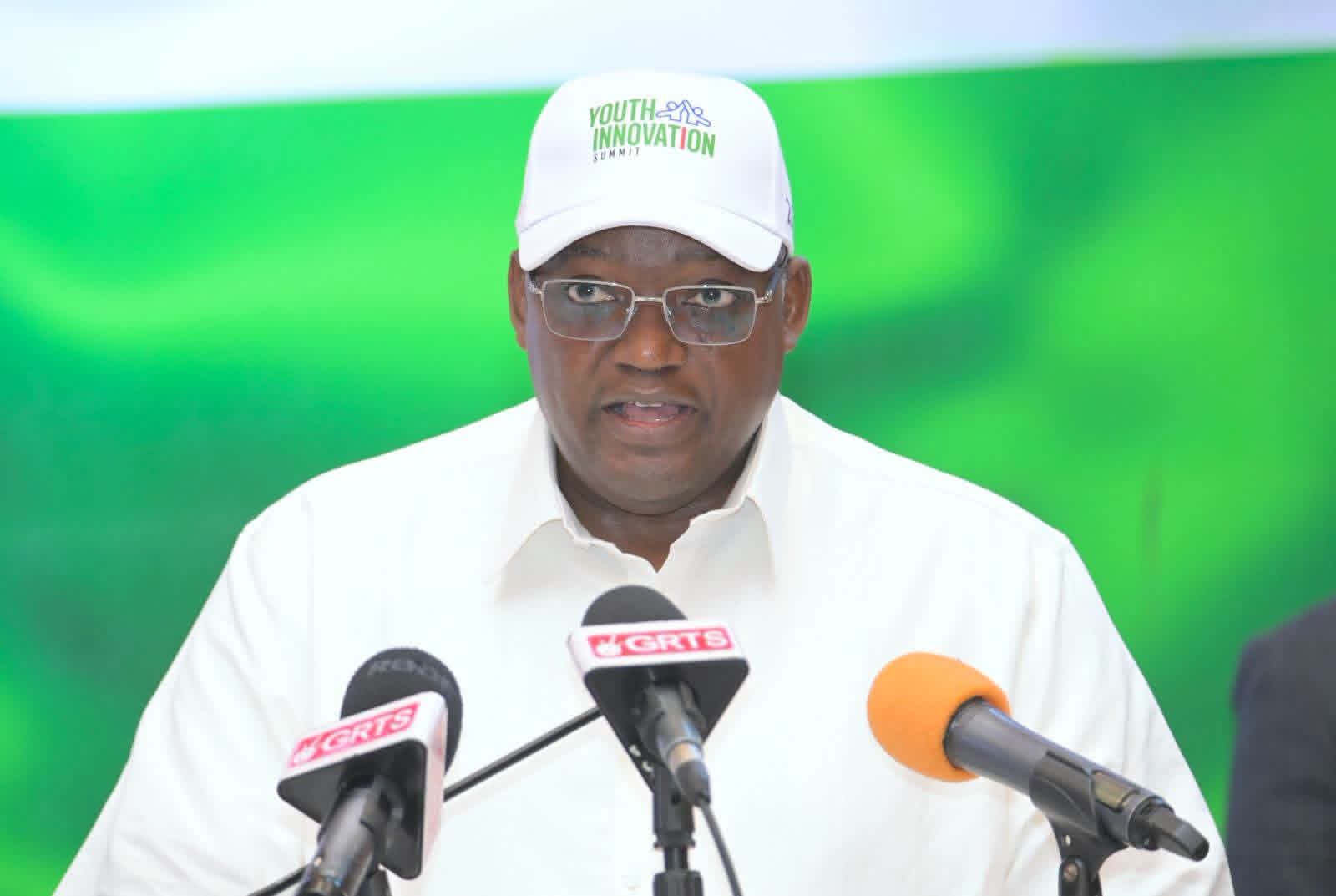
President Adama Barrow on Saturday urged young people to prepare for the future, telling hundreds of youth at the 2026 Youth Innovation Summit that “the future belongs to those who prepare for it.”The President was speaking at the Sir Dawda Kairaba Jawara International Conference Centre, where several hundred young people from organisations across the country gathered for the annual summit.The Youth Innovation Summit brings young people together to discuss relevant issues, share ideas, and challenge the realities shaping youth affairs and the future of The Gambia.It serves as a platform for youth empowerment and fosters collaboration between young people and government.Key sponsor Comium said it believes youth are The Gambia’s greatest resource. “The country’s future depends on how we prepare young people to thrive in a digital-driven world,” said Isatou Ceesay, Comium’s Director of Marketing and Communications.A highlight of the summit was the story of Ebrima Jallow, a young man who once embarked on the perilous journey to Europe. Now a successful entrepreneur, Jallow was given the podium to inspire participants.He stands as living proof that Gambians can succeed at home.In his address, President Barrow recounted his own journey to Europe as a young man, with the belief that it was the only way to live a better life. He later realised that success could also be found at home.He used the lesson to encourage young people that with the right mindset, they can make it in The Gambia.The President assured youth that their development remains central to his government’s agenda, citing the construction of schools and TVET centres across the country to empower them.“It is government’s responsibility to ensure hope for our youth,” Barrow said. “That is why we are investing in agriculture and other sectors.”He urged young people to reject drugs, embrace innovation, and maintain peace, reiterating: “The future belongs to those who prepare for it.”Critical conversations at the summit centred on: Irregular migration and reintegration. Civic education, participation, and national cohesion. Youth empowerment, skills development, and entrepreneurship.Giving the vote of thanks on behalf of the Organising Committee, Maimuna Platt described the day as “an unforgettable day of learning among youths” and said it marks the beginning of more innovation and collaboration for nation building.
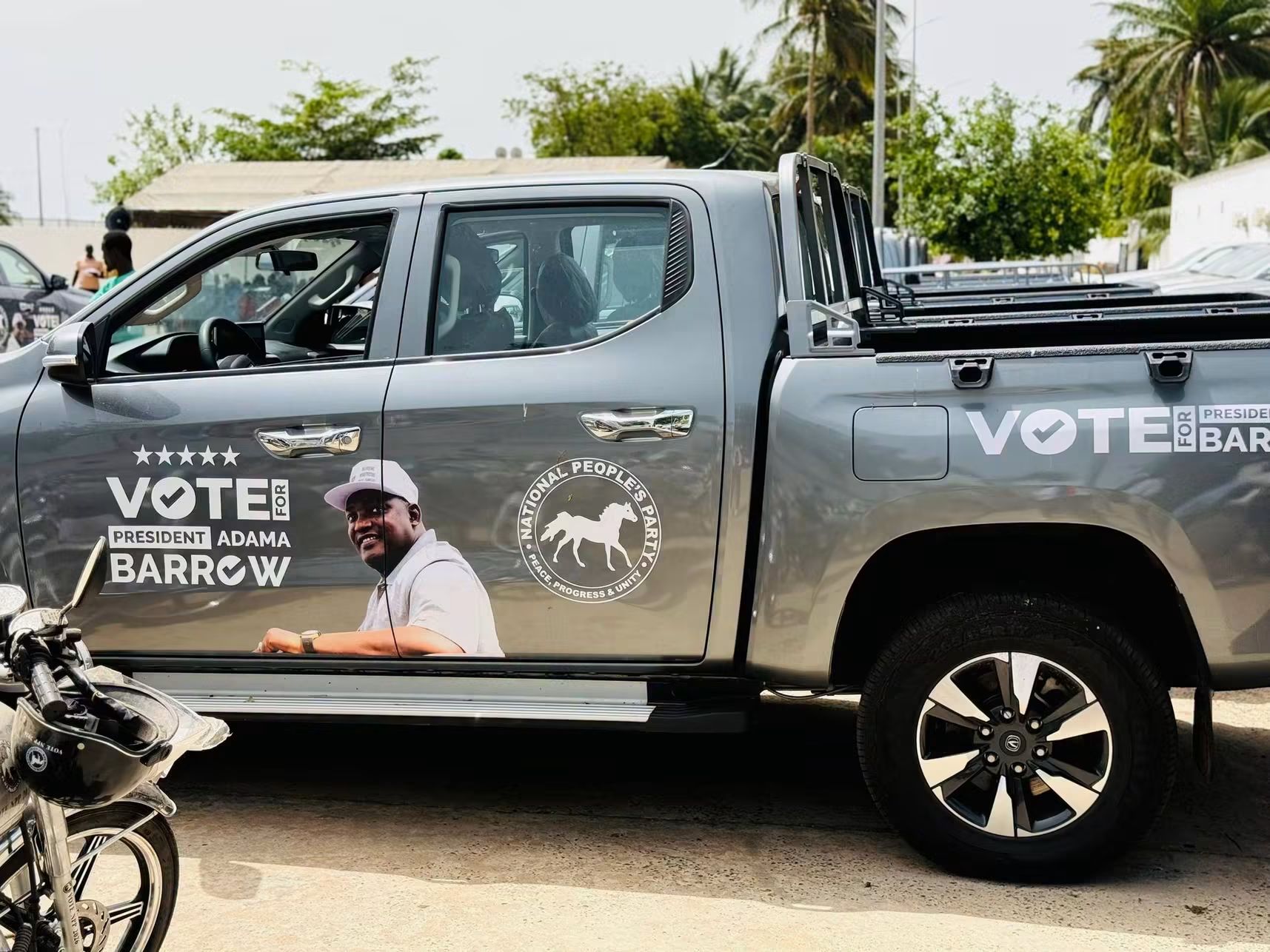
President Adama Barrow on Saturday presented a fleet of vehicles to partner parties of the NPP-led Grand Coalition during a ceremony held at State House. The presentation was attended by leaders of the Alliance parties and senior members of the National People’s Party executive.Representatives of the Alliance for Patriotic Reorientation and Construction (APRC), ANRD, NRP, NCP, Democratic Party, Citizens Alliance, GPDP, and GMC received keys to the new vehicles. The vehicles are expected to enhance grassroots mobilisation ahead of the December 5th Presidential election.The leaders of the 8 parties expressed appreciation to the President and leader of the Grand Coalition, saying the gesture will strengthen the Alliance. They predicted a landslide victory for President Barrow, describing him as development-oriented and committed to national progress.Isatou Jifanga Jarju of the APRC assured that the vehicles will be used for their intended purpose.Mai Ahmad Fatty of the Gambia Moral Congress (GMC) said the Grand Coalition is strong and well-positioned to win the election, citing what he called the President’s “life-changing development projects” across the country.Dr Ismaila Ceesay of the Citizens Alliance urged beneficiaries to intensify grassroots mobilisation to strengthen the Grand Coalition. He said President Barrow will win with an overwhelming majority based on his track record over the last 9 years.GPDP leader Henry Gomez described the presentation as unprecedented in Gambian politics. “President Barrow respects his coalition partners and always supports them when necessary,” Gomez said. “Therefore, let us work together and speak with one voice to strengthen the Alliance.” He also called on Gambians to support the President and vote for him massively in December to ensure continuity of development.Leaders of the NCP, ANRD, and DP echoed similar sentiments, calling on all partner parties to vigorously campaign and mobilise support for the NPP-led Alliance.NRP leader Hamat N.K. Bah cautioned all beneficiary parties against misusing the vehicles, stressing that they are strictly for campaign purposes. He urged Alliance members to reach out to voters across the country.Bah also praised President Barrow’s development record, which he said has touched the lives of citizens nationwide. He challenged young people to support the President and avoid politicians who mislead them for selfish political goals.“There will be no shortcut to the Presidency,” Bah warned. “Government will not allow any individual or group to undermine the electoral process. A level playing field has already been ensured for all.”First Deputy National President of the NPP, Demba Sabally, said the presentation signifies President Barrow’s recognition of the important role of Alliance parties in strengthening the Grand Coalition. He urged them to redouble efforts and maintain unity to ensure victory for the Alliance.In his remarks, President Barrow described the event as a historic milestone in the country’s political evolution, noting it is the first time members of a coalition are receiving such support from the leading party.He called on all recipients to use the vehicles solely for political purposes to mobilise voters at the grassroots for the Grand Coalition.
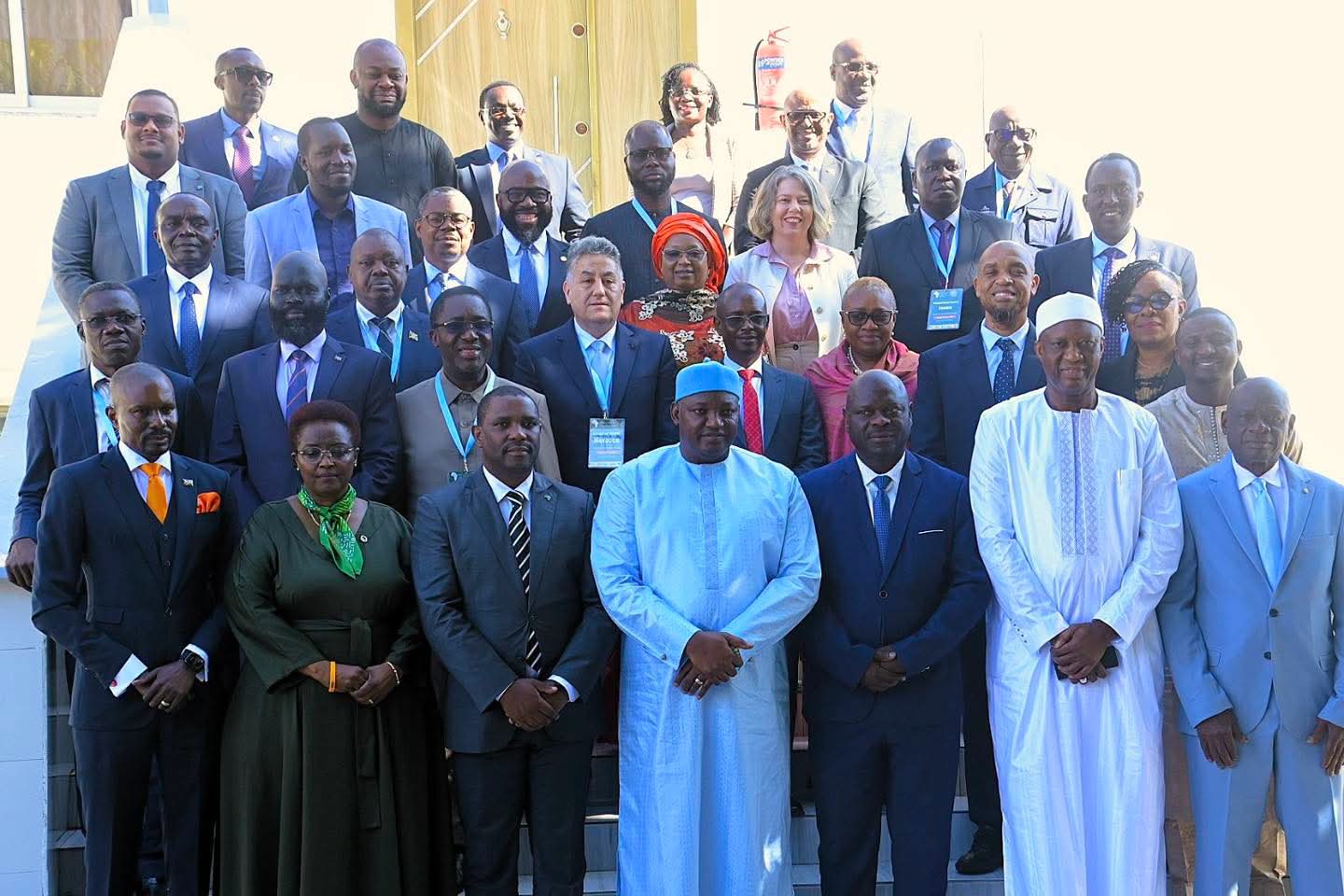
President Adama Barrow on Thursday received officials attending the annual African Tax Administration Forum Masterclass at State House.The delegation was led by the Commissioner General of the Gambia Revenue Authority, Yankuba Darboe, who briefed the President on the objectives and outcomes of the three-day meeting in Banjul. The Masterclass brought together tax administrators from across Africa to deliberate on tax administration, revenue collection, and the challenges and opportunities facing the continent.Speaking to reporters after the meeting, Commissioner General Darboe described the engagement as "very productive," noting that discussions centred on tax administration, revenue collection, and common challenges facing authorities in Africa.He commended President Barrow for the government’s support to GRA’s reforms, which he said have transformed revenue collection in The Gambia over the last 10 years.“As a result of these reforms, revenue collection has increased significantly. We have moved from collecting D3 billion in one year to now collecting D3 billion in one month,” Darboe said.The Executive Secretary of ATAF, Mary Baine, commended President Barrow for receiving the delegation. She said ATAF wants him to champion the call for stronger and more resilient tax administration systems across Africa, drawing on The Gambia’s model.The Chairperson and Vice Chairperson of ATAF also praised The Gambia for its political will and commitment to financing development through domestic revenue. They described the approach as more sustainable, noting that Africa cannot continue to depend on external financing for its development needs.The Minister of Finance and Economic Affairs, Seedy Keita, congratulated the GRA for hosting a successful ATAF Masterclass. He said the event is a vote of confidence in The Gambia’s tax administration system, which continues to serve as a model for others on the continent.The meeting was attended by senior tax administration officials and experts who are using the forum to strategise the way forward for tax administration and revenue mobilisation in Africa.
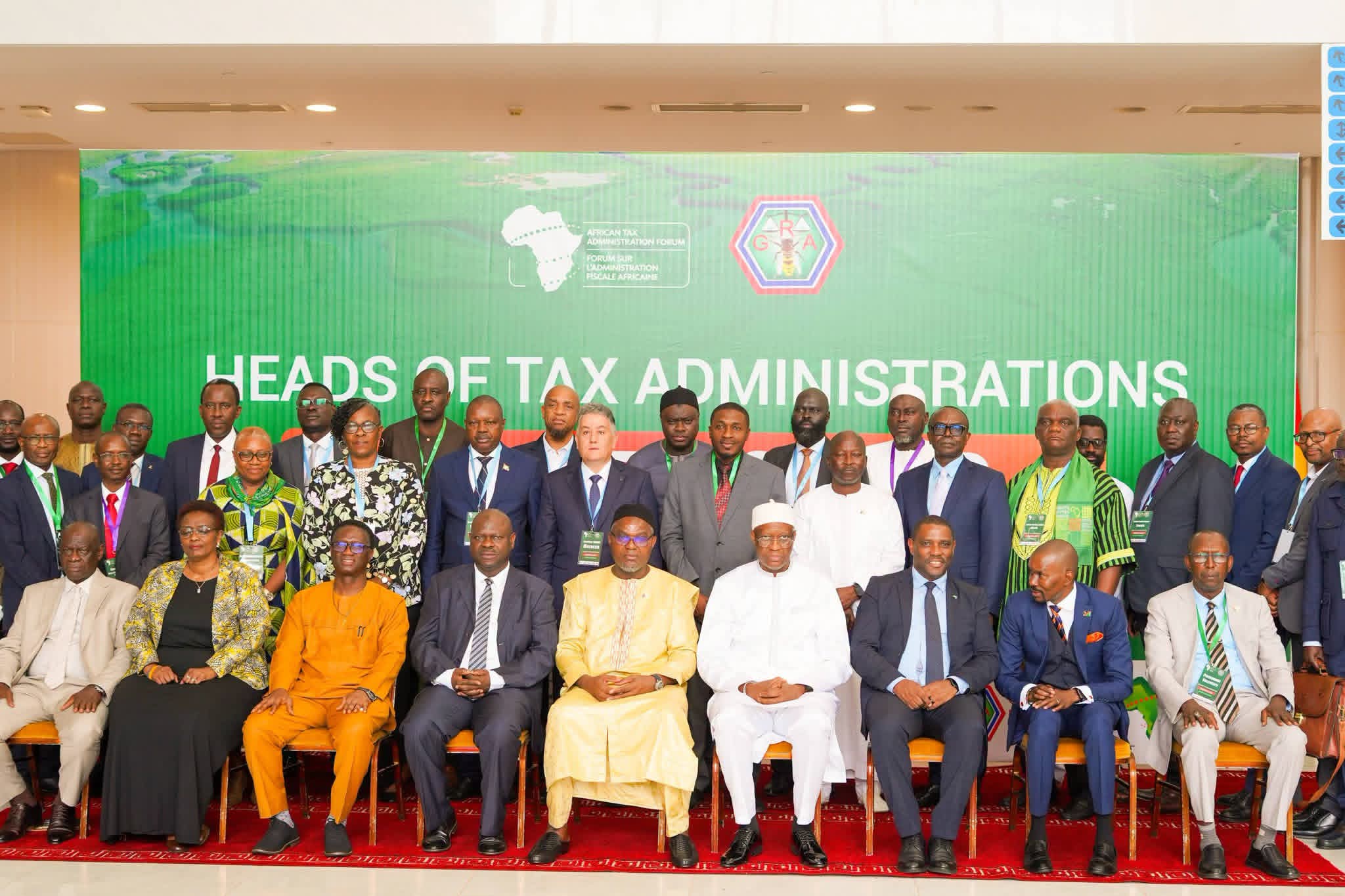
The Vice President, Mohammed B.S. Jallow, on Wednesday officially opened the African Tax Administration Forum in Banjul on behalf of President Adama Barrow.Tax administrators from across the continent gathered for the 7th Heads of Tax Administrations Master Class to discuss ways to strengthen revenue collection in Africa.Delegates came from different countries with diverse legal systems and institutional backgrounds, but share a common goal: to strengthen Africa’s capacity to mobilise domestic resources to improve lives.Delivering the President’s statement, Vice President Jallow said domestic resource mobilisation has been a central pillar of The Gambia’s national development agenda.“Since the inception of my administration in 2017, domestic resource mobilisation has featured prominently on The Gambia’s national development agenda,” he said. “This strategic focus is informed by the growing realisation that African governments cannot achieve sustainable prosperity, economic resilience, and true sovereignty by relying indefinitely on external loans, grants, and development assistance.”The Vice President noted that African economies have faced devastating calamities, global supply chain disruptions, and uncertainties arising from conflicts around the world. He said that these challenges have forced many countries to undertake major reforms to modernise their revenue administration, and that The Gambia has been a beneficiary of those reforms.“Today, The Gambia is reaping the benefits of these reforms through improved efficiency, enhanced transparency, stronger revenue performance, and increased domestic resources to support our national development aspirations,” he said.Vice President Jallow also commended the leadership of the Gambia Revenue Authority, saying it reflects the theme of the Master Class.“The Commissioner General’s leadership stature stands as a practical example of the theme of this Master Class, that great institutions are built by leaders who have the courage to embrace change and the determination to see it through,” he said.For his part, the Commissioner General of the Gambia Revenue Authority, Yankuba Darboe, said the Master Class has been a source of inspiration for his leadership.“When I say this Master Class has had a profound impact on my own leadership journey. Since the launch of this initiative, I have had the privilege of participating in several editions, often accompanied by my Deputy Commissioner General,” Darboe said. “Every year, we return home with new ideas, fresh perspectives, and practical lessons from fellow Commissioners General who have faced challenges similar to those confronting us in The Gambia.”After the deliberations in Banjul, the tax administrators are expected to leave with renewed strategies to combat base erosion, profit shifting, and illicit financial flows that deprive Africa of much-needed development resources.Participants of the 2026 ATAF Master Class are also expected to adopt a communique outlining key recommendations for tax administration across the continent.
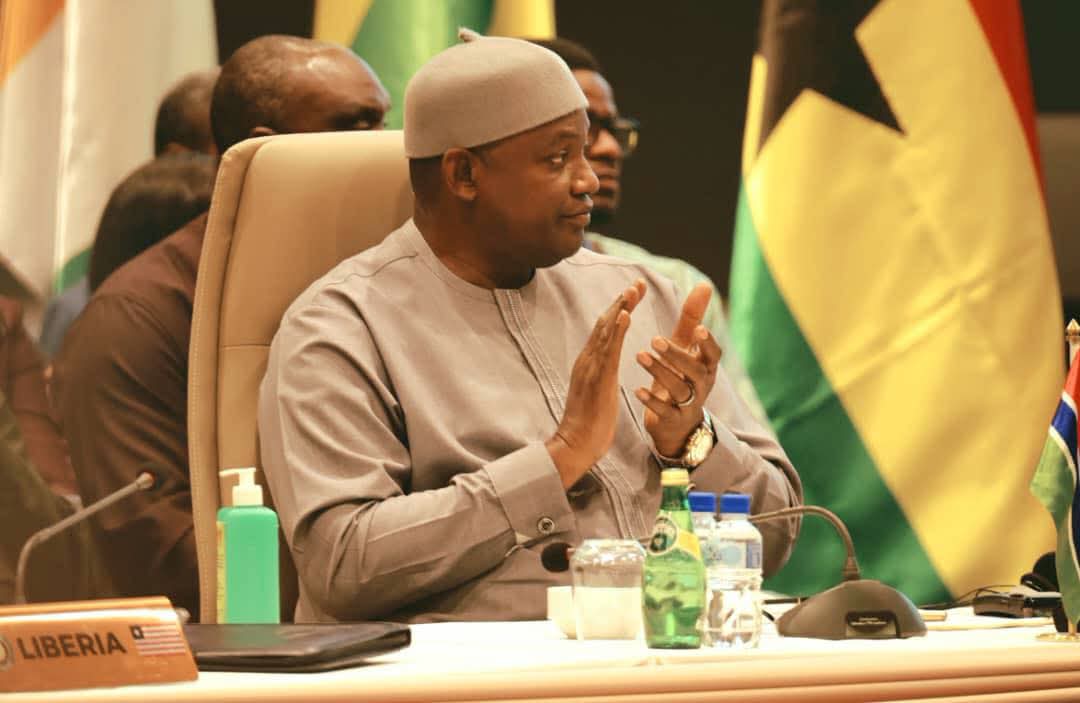
The President, Adama Barrow, has called for stronger regional solidarity to confront terrorism, violent extremism, climate change, and other pressing challenges facing West Africa.President Barrow made the call on Saturday at the opening of the 69th Ordinary Session of the ECOWAS Authority of Heads of State and Government in Freetown, Sierra Leone. Leaders at the summit pledged to accelerate efforts toward a fully integrated West Africa.The meeting is being described as a historic moment for ECOWAS as the bloc refocuses on democracy, good governance, security, trade, and infrastructure.ECOWAS Commission President Dr. Omar Alieu Touray said the summit provides a historic opportunity for leaders to deliver on their pledge to integrate the sub-region into a single bloc capable of addressing shared challenges.He described ECOWAS as a critical platform for dialogue, regional cooperation, and democratic consolidation.Dr. Touray also expressed gratitude to President Barrow for supporting his candidature four years ago, which led to his appointment as President of the Commission.Chairman of the ECOWAS Authority, President Julius Maada Bio of Sierra Leone, said the summit calls for reflection on the past and future of the organization.He noted that the world is undergoing profound changes and increased competition for resources, and urged ECOWAS to adapt to remain relevant and competitive."West Africa carries greater weight when it speaks with one voice," President Bio said.President Barrow reiterated the need for concerted sub-regional action on terrorism, violent extremism, and climate change, warning that these threats require urgent attention.On The Gambia, President Barrow thanked ECOWAS for its support during the country’s transition. He reassured the bloc that his government will conduct a free, fair, and credible election in December.He also reaffirmed The Gambia’s commitment to regional integration and to ECOWAS institutions.At the close of the summit, Senegalese President Bassirou Diomaye Diakhar Faye succeeded President Bio as Chairman of ECOWAS. He will lead the bloc for the next two years.Dr. Touray also concluded his four-year term as President of the ECOWAS Commission. He thanked leaders for their support during what he described as a "very tough and challenging" period.
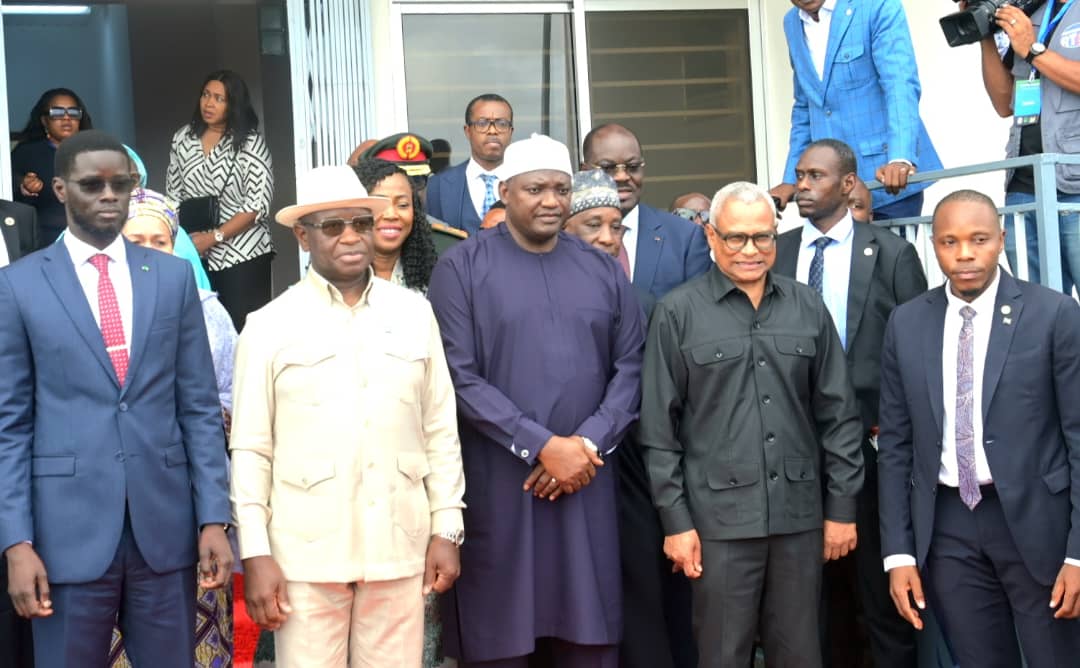
On the eve of the 69th Ordinary Session of the ECOWAS Authority of Heads of State and Government, Sierra Leone inaugurated a state-of-the-art International Convention Centre named after President Julius Maada Bio on Saturday.The inauguration ceremony in Lungi was attended by several sub-regional leaders, with His Excellency Adama Barrow attending as Special Guest of Honour.The new facility is being hailed as a major milestone in Sierra Leone’s modernisation drive.President Barrow arrived at Lungi International Airport Saturday morning to join other West African leaders for the ECOWAS Summit. He was received by Sierra Leone’s Vice President, Dr Mohamed Juldeh Jalloh, who escorted him through airport formalities reserved for visiting Heads of State.The two leaders held a brief tête-à-tête in the VIP lounge before President Barrow was driven to the nearby convention centre.Located a few metres from the International Airport, the Julius Maada Bio International Convention Centre is one of several infrastructure projects undertaken by the Bio administration to position Sierra Leone as a hub for sub-regional, continental, and global diplomacy.The ceremony was attended by Heads of State, ECOWAS officials, and other dignitaries.In his remarks, President Barrow praised President Bio for the ambitious initiative, describing it as a testament to visionary leadership.“One can safely and boldly conclude that it is a testament to the visionary leadership and statesmanship of President Bio. No wonder the centre proudly bears his name,” President Barrow said. “This edifice vividly symbolises what is attainable when leaders dedicate their lives to their nations and toil not only for the present, but also for generations to come.”President Barrow noted the special significance of the occasion for The Gambia.“For The Gambia, the occasion carries unique significance. Sierra Leone and The Gambia are bound not merely by geography and membership of ECOWAS, but equally by a shared history marked by resilience, resourcefulness, and an unwavering commitment to democracy, peace, and regional integration,” he said.He added that the new convention centre will create opportunities for Sierra Leone and position the country as a hub for diplomacy, dialogue, and investment.“A convention centre of such magnificence is more than a physical structure. It is a public space to generate and share ideas, knowledge, and expertise. It is an avenue for constructive diplomacy, a venue for commerce, and a platform from which Africans can present their viewpoints to the world with dignity,” President Barrow stated.“I am confident that the centre will host insightful dialogues to influence our region’s future, moderate negotiations for our shared prosperity, and hold many celebrations of success.”The President reassured Sierra Leone of The Gambia’s pride in the achievement and urged both countries to continue working together to transform their nations.President Barrow later joined his host and fellow leaders from Senegal, Ghana, Mauritania, Cabo Verde, and Liberia to cut the ribbon and officially open the Julius Maada Bio International Convention Centre.For President Bio, the inauguration marked a proud moment as Sierra Leone welcomed ECOWAS leaders for the 69th Ordinary Session.
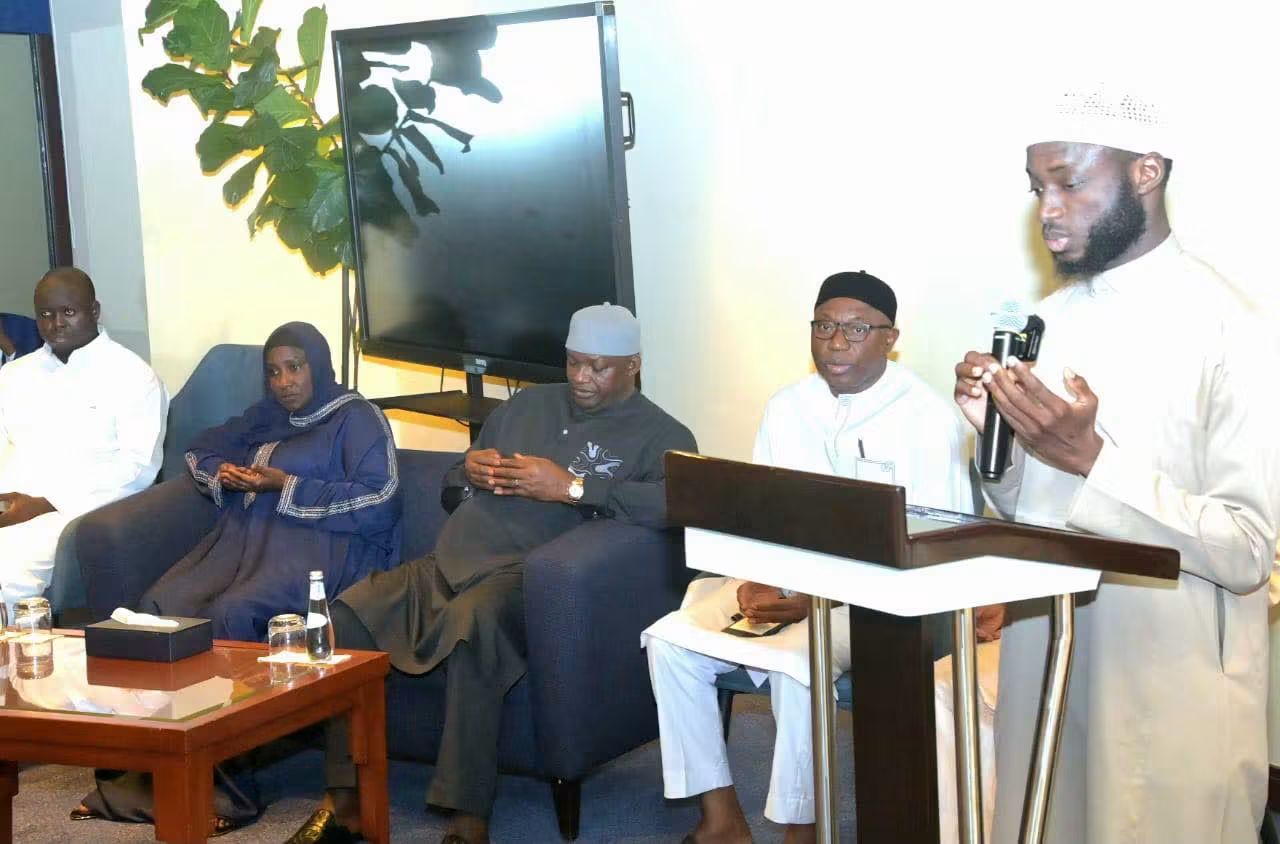
The President, His Excellency Adama Barrow, on the sidelines of his visit to the Kingdom of Saudi Arabia, held a meeting with members of the Gambian community at his hotel in Jeddah. The meeting provided an opportunity to discuss challenges affecting Gambians living and studying in the Kingdom.Speaking on behalf of Gambian students, Muhammed Salieu Jeng, Chairman of the Students’ Union, welcomed the President and delegation. He disclosed that 500 Gambian students, including 20 women, are currently enrolled in Saudi universities pursuing undergraduate and graduate degrees in Islamic Studies, Engineering, and Public Administration.Mr Jeng thanked the Gambian Embassy for its support but appealed to the government to increase scholarship opportunities, expand consular services, and support their initiative to build a library in Jambur.President of The Gambian Association in Saudi Arabia, Manjai Ceesay, appealed for government intervention to facilitate access to residence and work permits to enable Gambians to secure jobs and move freely.Representatives of women in the community, Adama Jallow and Fatumata Jatta, highlighted challenges with Iqama and Nusuk permits. Ms Jallow said many Gambians are denied entry into Makkah during Hajj for lack of permits, restricting movement and business activities.Ms Jatta described the concerns as pressing and urged President Barrow to engage Saudi authorities for favourable terms. She, however, noted that Gambians are widely respected in the Kingdom for being law-abiding and peaceful.She added that the community association remains strong and often supports members in difficult situations through contributions.Consul General in Jeddah, Ebou Ndure, acknowledged the challenges but explained that they affect many communities due to evolving Saudi laws.“As diplomats, we are also guided by strict laws which we must abide by,” Mr Ndure said. He noted that Hajj regulations now require specific documents for entry into Makkah, and the Consulate has no authority to circumvent Saudi immigration procedures.Mr Ndure reassured that the government will continue engaging Saudi counterparts to ease the challenges and will provide consular services in emergencies.Ambassador H.E. Mambury Njie said issues around Iqama and Nusuk also affect Embassy staff. He stated that the Embassy is working on a roadmap to streamline scholarship access and is engaging authorities to facilitate biometric passports.In response, President Barrow underscored the importance of dialogue in addressing community concerns. He thanked Gambians for their patriotism and urged them to reach out to the Embassy and Consulate with issues.The President reminded the community that immigration laws evolve and it is important to adjust to ensure a safe and legal stay.“Our government prioritises the welfare of citizens wherever they may live,” President Barrow said. “We will continue to engage our Saudi counterparts at all levels to secure favourable terms for Gambians.”He encouraged Gambians to return home and take advantage of opportunities, citing major investments in education. Over the last 9 years, he said, the government has transformed the University of The Gambia into a modern institution offering programs up to PhD level with 8,000 students. Technical universities have also been established, with 75% of students on scholarship.President Barrow urged the community to remain united, law-abiding, and hardworking, noting that “every Gambian is an ambassador.”He updated them on developments back home and called for peace ahead of the elections. “The Gambia has secured its place as a bastion of peace and democracy in Africa,” he said, adding that such stability has attracted major investors like Aliko Dangote, who has pledged $2 billion in investments.The President concluded by promising to leave a lasting legacy on national development, saying the foundations for sustained socio-economic growth have already been laid.
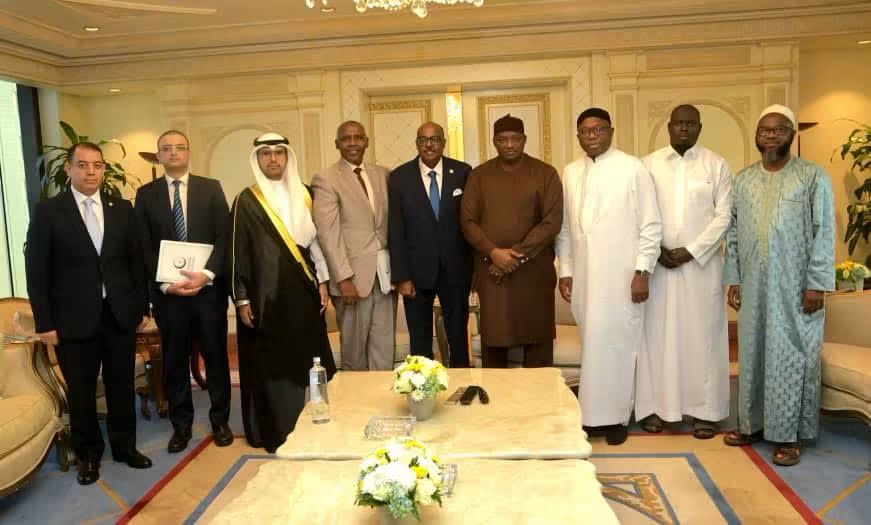
A high-level delegation from the Organisation of Islamic Cooperation, led by Assistant Secretary General H.E. Ambassador Tarig Ali Bakhit Saleh, on Wednesday held talks with President His Excellency Adama Barrow in Jeddah.The meeting focused on key issues affecting the Islamic Ummah and the role of the OIC under President Barrow’s chairmanship.Ambassador Saleh commended The Gambia for its principled stance in defending the rights of the Rohingya people at the International Court of Justice. As current Chairman of the OIC, President Barrow was also briefed on the organisation’s activities and strategic plans for the future.Speaking to GRTS after the closed-door meeting, Ambassador Saleh described the engagement as "very productive."“The Gambia plays and continues to play a very important role in joint Islamic action and solidarity, and this has been appreciated by the membership of the OIC and the General Secretariat,” he said.He described The Gambia as a very important member of the OIC, noting that since hosting the OIC Summit in 2024, the country has undertaken several initiatives to support the organisation’s work.The discussions also centred on the Rohingya issue, where The Gambia is leading the case at the ICJ.“We had a very intensive discussion on this issue and hopefully will continue the discussion with The Gambia on the way forward and how to proceed on this important cause of the Rohingya people,” Ambassador Saleh said.The delegation and President Barrow also addressed the ongoing war in the Middle East and its potential to destabilise the region. Ambassador Saleh disclosed that the OIC plans to convene a meeting of the Council of Foreign Ministers to discuss the situation, with The Gambia expected to play a key role.He concluded by thanking President Barrow for his leadership and continued support to the Organisation.
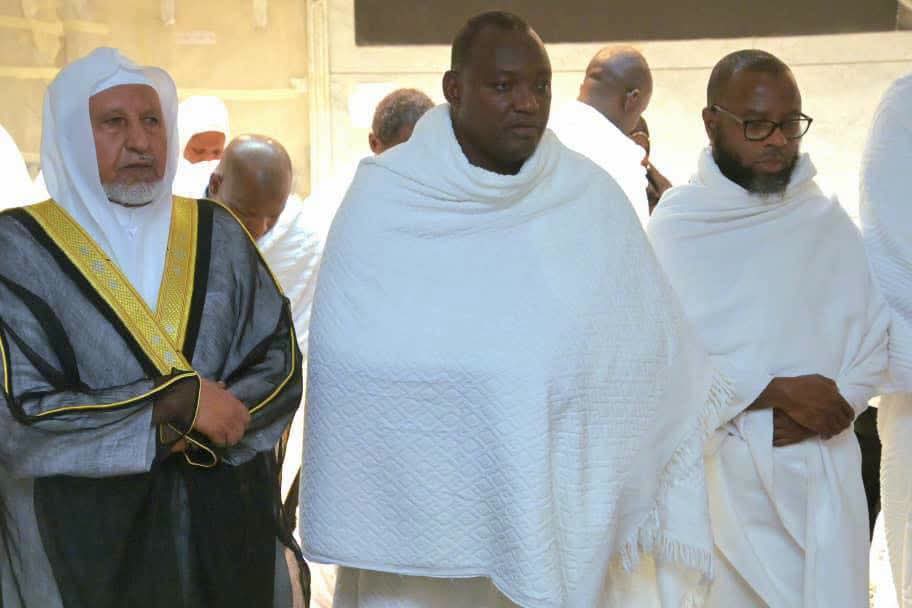
His Excellency President Adama Barrow and his delegation have arrived in the Holy City of Makkah from Medina to perform Umrah, the lesser pilgrimage.Dressed in Ihram, a symbol of purity and humility, the President and his delegation travelled to Makkah aboard a two-hour train journey to Islam’s holiest city.Consular Ebou Ndure said the trip to Makkah marks the climax of the President’s spiritual journey, which has so far included visits to the Prophet’s Mosque in Medina, Masjid al-Quba, and the Mountains of Uhud.Inside the VIP coach, the atmosphere was calm and reflective, filled with religious chants as the President reaffirmed his intention to perform Umrah in accordance with Islamic teachings and traditions.On arrival in Makkah, President Barrow was received by officials from the Royal Palace and escorted to the Royal Guest House overlooking the Holy Kaaba.Shortly after, he was led to Masjid Al-Haram to begin the Umrah rites. The President first performed Maghrib prayers at the Holy Kaaba alongside members of his delegation.He then proceeded to perform Tawaf, circling the Holy Kaaba seven times, aboard specially designated vehicles reserved for heads of state and dignitaries.Following Tawaf, President Barrow performed Sa’i, walking between Safa and Marwa. The nearly 2km journey, completed seven times, relives the footsteps of Hajara, wife of Prophet Ibrahim, who made the same trek in search of water for her son, Prophet Ismail.After completing all prescribed rituals, the President returned to the Kaaba to perform Ishaa congregational prayers, marking the conclusion of the Umrah rites.President Barrow was later escorted back to the Royal Guest House. He is expected to travel to Jeddah for a series of engagements, including a meeting with members of the Gambian community in Saudi Arabia.




Leave A Comment
Your email address will not be published. Required fields are marked *